As an Amazon Associate this site earns from qualifying purchases.
Running Dyna-Gro Foliage Pro for juniper shohin bonsai in grow tents works best at a heavily diluted rate of about 1/8 to 1/4 teaspoon per gallon, fed with every watering during the active spring-to-late-summer push, then tapered through fall. The 9-3-6 NPK with full micronutrients matches juniper's slow, fibrous root structure, and the enclosed environment of a grow tent lets you stabilize humidity around 50-65%, temperatures in the 65-78°F range, and airflow at a steady 0.5-1.0 m/s — all conditions a shohin-sized juniper struggles to find on a windowsill. The trick is restraint, both with the nutrient bottle and with the tent's climate controls.
This 2026 guide walks through exactly how to dial in dyna-gro foliage pro for juniper shohin bonsai in grow tents, the supporting equipment a shohin-scale tent needs, and the common ways growers accidentally cook a 6-inch juniper inside a sealed box of light and warm air.
When shopping for dyna-gro foliage pro for juniper shohin bonsai in grow tents, it pays to compare specs, capacity, and real-world runtime before committing.
Why Foliage Pro Suits Junipers Specifically
Junipers are conifers, and conifers behave differently than the leafy tropicals most indoor growers feed. They put on most of their growth as fine, ramified tip extension rather than large flushes of soft leaves, and they hold mycorrhizal partnerships in well-aerated substrates like pumice, akadama, and lava. They do not want a heavy hit of nitrogen, and they do not want the salt buildup that comes from overfeeding a small pot. That's where Foliage Pro's profile earns its reputation among bonsai growers.
Three things make it work for juniper shohin:
- Complete micronutrient package. All 16 essential nutrients are in the bottle, so you don't need to layer a separate cal-mag or chelated iron supplement on top — junipers tend to yellow at the tips when manganese, iron, or zinc are missing, and a single-bottle feed avoids stacking errors.
- Urea-free nitrogen. The nitrogen sources are nitrate and ammoniacal, both readily available to conifer roots without the pH swings that urea-heavy feeds cause in small, fast-draining bonsai substrates.
- Low EC at working dilution. At 1/4 tsp per gallon, the runoff EC sits around 0.8-1.2 mS/cm, which is comfortably under the juniper salt-burn threshold and ideal for the 4-6 oz of substrate a shohin pot actually holds.
Compare that to a 20-20-20 powder or a tomato food and the difference is immediate: junipers fed Foliage Pro at low rates keep their needles tight, their internodes short, and their bark color rich rather than pale.
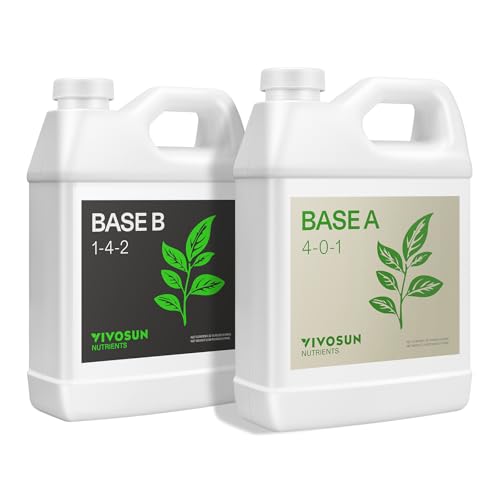
- The Perfect Combination: Vivosun nutrients base A & B are two-part, concentrated, holistic formulas that provide complete macro and micronutrients for plant growth; They can be
- Rich Nutrient Elements: This bundle is composed of Nitrogen, Phosphorus, Potassium, Calcium, Magnesium and more, which help support rapid plant growth at all growth stages and
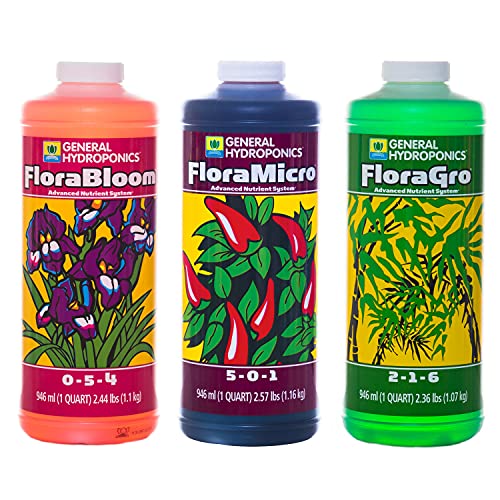
- The Flora Series is a hydroponic-based nutrient system that helps fulfill your plants’ nutrient needs at every stage of growth
- Nutrients included in the Series are FloraMicro, FloraBloom, and
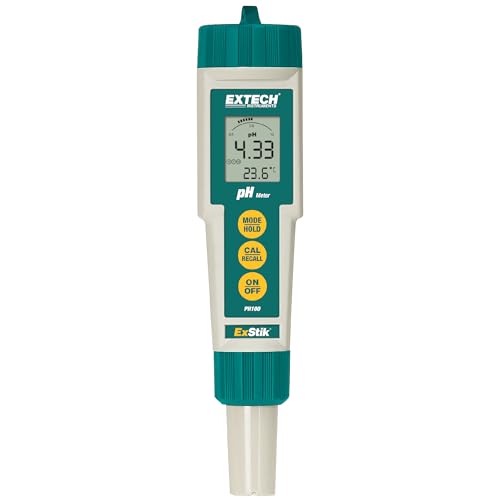
- Stem thermometer with adjustable stainless steel probe
- 4.5-Inch (114mm) stainless steel probe adjusts from 0 to 180-Degrees for storage or measurement
The Grow Tent Setup That Makes This Work
A shohin juniper is a tree under roughly 8 inches tall, often closer to 4-6 inches including pot. You do not need — and should not want — a 4x4 tent for one or two of these. A 2x2x4 or even a 16x16x48 mylar tent is the sweet spot. Bigger tents make climate harder to stabilize because a 6-inch tree barely transpires enough to influence ambient humidity.
Lighting
Junipers are full-sun trees in nature, so they want serious PPFD — aim for 400-600 µmol·m²·s at canopy with a 12-14 hour photoperiod during the growing season. A 100-150W quantum-board LED is more than enough for a shohin tent and gives you DLI headroom without baking the foliage. If you're still choosing fixtures, our roundup of the top LED grow lights for 2026 covers efficient panels in the right wattage range for compact tents.
Airflow
This is where most indoor juniper failures originate. Stagnant air invites spider mites, fungal cankers, and tip dieback. Run a small clip-on oscillating fan continuously and an inline exhaust fan with a carbon filter cycling on a humidity- or temp-triggered controller. You want needles to flutter visibly, not whip around.
Humidity and Temperature
Aim for 50-65% RH. Above 70% in a closed tent, juniper interior foliage starts to brown and shed; below 40%, the fine outer needles dry out faster than the roots can replace water. A small ultrasonic humidifier on a controller is usually enough for a shohin-scale tent. For tuning this, the techniques in our guide to maintaining humidity levels for indoor gardens apply directly to bonsai tents.
Mixing and Applying Foliage Pro for Shohin Junipers
This is the section growers usually skip and regret. Shohin pots are tiny — sometimes only 60-100 mL of substrate — so dilution math matters more than for any other indoor plant.
Spring (March-May): Building the Push
Start at 1/8 teaspoon per gallon, applied with every watering, as soon as you see new tip extension. Junipers don't "wake up" on a fixed date in a grow tent — they cue off temperature and photoperiod, so under indoor lights you can start as early as late February if the tent has been warm. Test runoff EC weekly; you want roughly 0.6-1.0 mS/cm.
Summer (June-August): Holding Steady
Step up to 1/4 teaspoon per gallon, still with every watering. This is when ramification builds, and junipers in tents under good light can put on remarkable density — far more than the same tree on a balcony — provided the feed is consistent and the substrate is flushed with plain water once every 3-4 weeks to prevent salt accumulation.
Late Summer to Fall (September-October): Tapering
Drop back to 1/8 teaspoon, then to feeds every other watering. You want the tree to harden off before any dormancy attempt, and continuing high nitrogen produces soft growth that will not lignify properly.
Winter: Minimal or None
If you're cycling the tent cooler (50-55°F) to give the tree a dormant period, stop feeding entirely and water sparingly. If you're keeping it growing through winter under continued lights, feed at 1/8 tsp every third watering. Junipers held in active growth year-round in tents do survive, but you trade dormant-period root development for above-ground extension — not always the right tradeoff for a shohin destined for refinement.
Measuring What You're Doing
Bonsai-scale feeding is a measurement game. A drift of 0.2 mS/cm in solution EC matters when the pot is the size of a tea cup. You'll want:
- A digital pH/EC pen. Foliage Pro is slightly acidic in solution; with most tap water you'll land at pH 5.8-6.5, which is fine for juniper. A pen lets you confirm rather than guess. See our 2026 picks in the best pH and EC meters guide.
- A 10 mL or 30 mL syringe. A teaspoon is approximately 5 mL; 1/8 tsp is around 0.6 mL. You cannot eyeball this from a bottle cap. A small dosing syringe pays for itself in needle quality.
- A kitchen scale that reads to 0.1 g. For batches: about 0.7 g of Foliage Pro per gallon = roughly 1/4 tsp.
Substrate, Water, and the Salt Problem
Shohin junipers should sit in fast-draining inorganic mix: typically 1:1:1 akadama, pumice, and lava, or a 2:1 pumice-to-lava for trees in development. This drains so fast that you can feed at every watering without drowning roots, but the same drainage means dissolved salts move quickly through the profile and can crystallize at the substrate surface where evaporation concentrates them.
Two habits prevent salt damage:
- Water until 20-30% runoff every time. Don't sip-water a shohin in a tent — pour through until liquid runs from the drain holes. This both feeds and flushes.
- Plain-water flush monthly. Once a month, skip the feed and pour 4-5 pot-volumes of plain (ideally rainwater or RO) through the substrate.
If you're new to the role nutrients play in container growing, the broader picture in our indoor plant nutrients guide for 2026 sets useful context for why Foliage Pro behaves the way it does in small pots.
Common Mistakes With Juniper Shohin in Grow Tents
Feeding strength instead of frequency. Growers used to outdoor feeding regimes will dose at 1 tsp per gallon every two weeks. Inside a tent, that produces salt spikes and burned root tips. Many small, weak feeds beat one strong feed.
Ignoring light distance. A 150W LED at 8 inches above a shohin will scorch tips. Most quantum-board fixtures want 18-24 inches of clearance from a shohin canopy, sometimes more for high-PPF panels.
Sealing the tent. Bonsai tents should not run the same negative-pressure scheme used for flowering crops. You want air exchange and constant micro-airflow rather than odor containment. Crack a passive intake or leave the bottom vents open.
Overwatering by tent humidity. A juniper in 70%+ RH dries out far slower than the same tree on a sunny porch. Watering schedules from outdoor growing — "every morning" — will rot roots inside a tent. Water when the substrate surface is dry to the touch and the pot feels light.
Skipping the dormant period. Junipers benefit from a cool rest. If your tent can drop to 45-55°F for 6-10 weeks in winter, the tree will reward you with stronger spring growth. Permanent indoor culture is doable but not optimal.
Frequently Asked Questions
What dilution of Dyna-Gro Foliage Pro is safe for a juniper shohin under LED lights?
Start at 1/8 teaspoon per gallon and feed with every watering during active growth, increasing to 1/4 teaspoon in midsummer if runoff EC stays below 1.5 mS/cm. Going higher rarely helps a shohin-sized tree and frequently causes tip burn under enclosed tent conditions where transpiration is moderate.
Can I keep a juniper bonsai indoors permanently in a grow tent without dormancy?
You can keep it alive and growing, but most growers see slower long-term vigor and weaker spring pushes than trees that get a 6-10 week cool rest at 45-55°F. If you can dial your tent's environment down for winter — even just by venting cooler outside air — the tree will be healthier.
How often should I flush Foliage Pro out of bonsai substrate?
Run a plain-water flush of 4-5 pot-volumes once every 3-4 weeks if you're feeding every watering, or every 6-8 weeks if you're feeding every other watering. Watch the substrate surface — any white crystalline deposit means a flush is overdue.
What humidity should a juniper shohin grow tent run at?
Aim for 50-65% relative humidity. Below 40% the fine needles desiccate and brown back; above 70% interior foliage dies off and fungal pressure climbs. A small ultrasonic humidifier on a hygrostat is enough for a 2x2 tent.
Does Foliage Pro need to be mixed with anything else for junipers?
No. The whole point of the 9-3-6 formula is that all 16 essential nutrients including calcium, magnesium, and the chelated micronutrients are present in one bottle. Adding cal-mag, Epsom salts, or kelp will usually push EC too high for a shohin pot and creates antagonism between elements.
Will using Foliage Pro indoors cause spider mites on my juniper?
The nutrient itself doesn't attract mites, but the conditions that often go with indoor feeding — warm, dry, still air — are exactly what mites want. Constant airflow, RH at or above 50%, and a monthly inspection of the underside of foliage with a loupe will prevent most outbreaks.
Can I foliar-feed my juniper shohin with diluted Foliage Pro inside a grow tent?
You can, at roughly 1/2 the root-feeding rate, sprayed early in the photoperiod so foliage dries before lights-out. Junipers absorb modest amounts of nutrients through their needles, but root-zone feeding is far more efficient and avoids the leaf-spot risk of wet needles in still tent air.
Key Takeaways
- Choosing the right dyna-gro foliage pro for juniper shohin bonsai in grow tents means matching the key features to your specific needs and budget
- Read real customer reviews and check the return policy before you commit
- Also covers: liquid bonsai fertilizer for juniper
- Also covers: shohin bonsai indoor feed schedule
- Also covers: tent grown bonsai nutrients
- Compare value across models — the priciest option is not always the best fit