Using botanicare pure blend pro grow tomato seedlings rockwool as a search query usually means you want a precise feeding recipe — not generic advice. The short answer: pre-soak conditioned rockwool cubes at pH 5.5, then begin feeding Botanicare Pure Blend Pro Grow at roughly 2.5–5 mL per gallon (a quarter-strength dose) once cotyledons fully open and the first true leaves appear, holding EC between 0.6 and 1.2 mS/cm and reservoir pH between 5.6 and 6.0 until your tomato seedlings are ready for transplant at 3–4 weeks. Below you'll find the full week-by-week schedule, pH targets, troubleshooting tips, and the reasoning behind each step.
Why Botanicare Pure Blend Pro Grow Suits Rockwool-Started Tomatoes
Botanicare Pure Blend Pro Grow (3-2-4) is an organic-based hybrid nutrient that blends mineral salts with derivatives like fish meal, kelp, alfalfa extract, and humic acid. For tomato seedlings in inert rockwool, that organic component matters more than people realize. Rockwool itself holds zero nutritional value and naturally pushes alkaline (often 7.5–8.5 straight from the bag), so the medium gives you a blank slate where the feed solution is the only nutrition the plant ever sees. A balanced grow-phase formula with chelated micros, magnesium, calcium, and slow-release organic nitrogen helps seedlings push roots into the fibrous cube without the salt burn you'd get from a synthetic bloom-stage feed.
The best botanicare pure blend pro grow tomato seedlings rockwool for your situation depends on how you plan to use it and where.


The 3-2-4 ratio leans nitrogen-forward but not aggressively so. That's exactly what young tomatoes want during the vegetative seedling stage — enough N for compact leaf development, enough P to fuel root elongation through the cube, and a healthy K background to prime stem strength for later trellising. If you've previously burned seedlings with a 7-9-5 cloning solution or a heavy 5-1-1 fish emulsion, Pure Blend Pro Grow at quarter strength is a noticeably gentler ramp.

Step 1: Condition Your Rockwool Cubes Before Anything Else
Skipping this step is the single most common reason tomato seedlings stall in rockwool. Unconditioned cubes can sit at pH 8+, which locks out iron, manganese, and phosphorus the moment the radicle emerges.
- Fill a clean tray or bucket with reverse osmosis or filtered tap water.
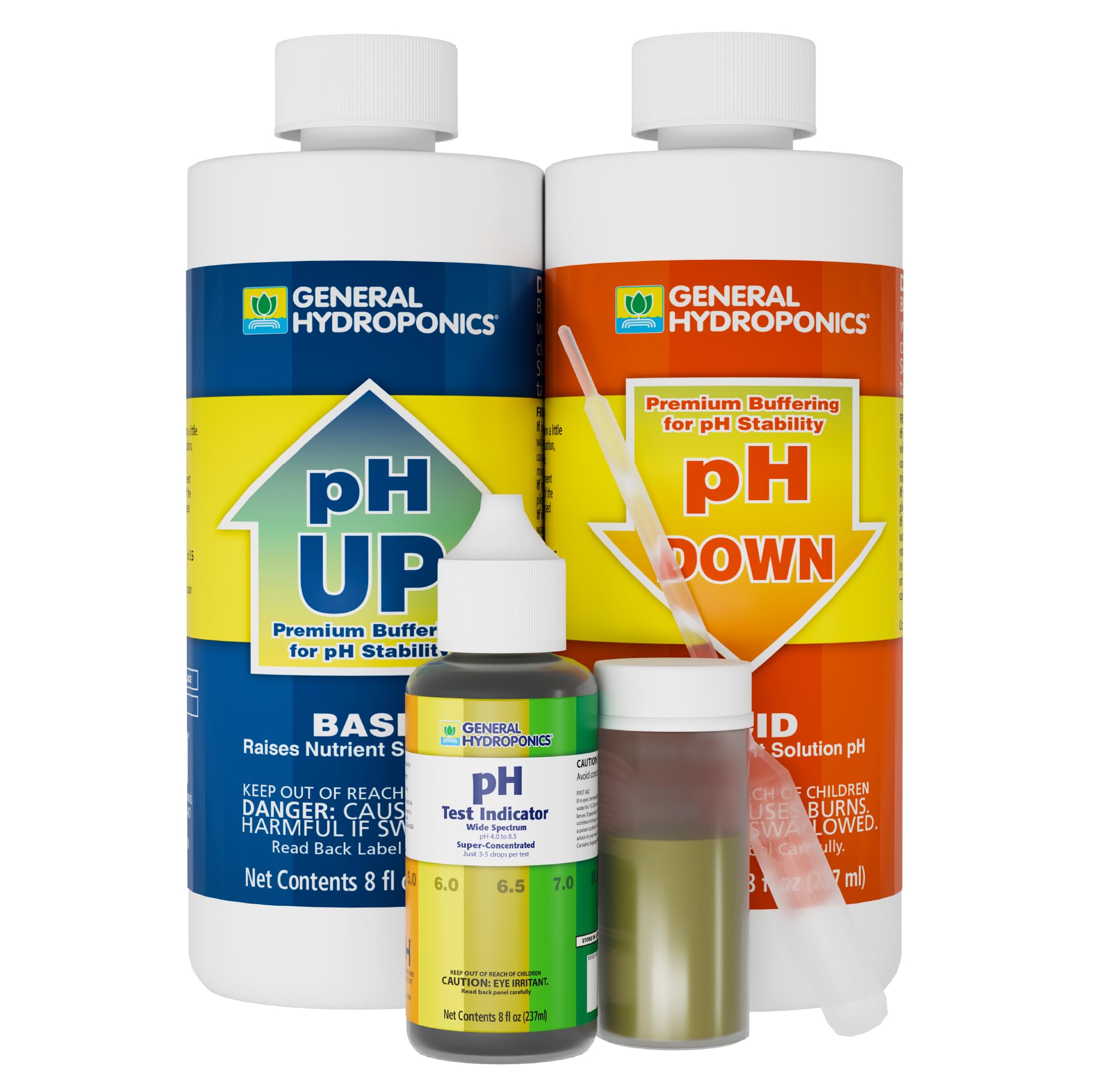
- Adjust the soak water to pH 5.5 using a food-grade phosphoric acid pH-down. Yes, 5.5 — even though your eventual target is 5.8–6.0. Rockwool's residual alkalinity will buffer the cubes upward during soaking.
- Submerge cubes for 1 hour. Do not squeeze them out.
- Lift, let drain freely for 5–10 minutes, then plant.
If you're new to managing acidity in soilless systems, our roundup of the best pH and EC meters of 2026 covers the affordable pen-style meters that hold calibration long enough for routine seedling work.
Step 2: Sow and Wait — Plain Water First
Place one pre-soaked tomato seed about 1/4 inch deep into the dimple of each conditioned cube. Cover the seed lightly with a loose tuft of rockwool to maintain darkness and humidity. Place trays under a humidity dome with the vents cracked. Bottom heat (75–82°F) accelerates germination from 10 days down to 4–6.

Do not feed at this stage. The seed embryo has all the energy it needs through cotyledon emergence. Adding nutrients now spikes EC in a wet cube, which delays germination and can rot the radicle. Mist the surface daily with pH 5.8 plain water if the cube top looks dry.
Step 3: First Feed — When and How Much
Wait for two visible cotyledons plus the first emerging true leaves before the first nutrient feed — typically 7–10 days after sowing. Then mix your first batch of botanicare pure blend pro grow for tomato seedlings in rockwool at the following starter strength:
- Pure Blend Pro Grow: 2.5 mL per gallon (≈ 0.6 mL per liter)
- Calcium-magnesium supplement (optional): 1–2 mL per gallon if you're on RO water
- Target EC: 0.6–0.8 mS/cm (roughly 300–400 ppm on the 500 scale)
- Target pH: 5.8
Bottom-feed by setting cubes in a shallow tray with about 1/4 inch of solution. Allow the cube to wick for 10 minutes, then pour off any excess. Top-feeding at this stage compacts the cube surface and can drown the crown.
Step 4: Week-by-Week Schedule
Tomatoes are heavy feeders by week three, but their seedling-stage ramp should still be conservative. Here's a reliable schedule:
| Stage | Days After Sowing | Pure Blend Pro Grow Dose | Target EC | Target pH |
|---|---|---|---|---|
| Germination | 0–7 | None — pH 5.8 water only | < 0.1 | 5.8 |
| Cotyledon & first true leaf | 7–14 | 2.5 mL / gal (¼ strength) | 0.6–0.8 | 5.8 |
| 2–4 true leaves | 14–21 | 5 mL / gal (½ strength) | 0.9–1.1 | 5.8–6.0 |
| Pre-transplant | 21–28 | 7.5 mL / gal (¾ strength) | 1.2–1.4 | 5.8–6.0 |
| Hardened transplant | 28+ | 10 mL / gal (full vegetative) | 1.5–1.8 | 5.8–6.2 |
Flush with plain pH 5.8 water once a week to prevent salt buildup inside the cube. You'll know it's working when the runoff EC comes out within 0.2 mS/cm of your feed EC — a sign that the cube isn't accumulating excess salts.
Step 5: Light, Air, and Humidity Around the Cube
Nutrition is only one leg of the stool. Tomato seedlings under-lit will stretch and topple regardless of how perfect your feed is. Aim for a DLI of 12–18 mol/m²/day, which usually means a 4000–6500K LED at 100–150 µmol/m²/s PPFD for 16–18 hours. If you're shopping for fixtures, our guide to top grow lights for indoor plants in 2026 covers wattage and spectrum picks that suit seedling shelves without burning tender leaves.
Humidity should sit around 65–75% during the first two weeks, then drop into the 55–65% band to harden the seedlings before transplant. A small clip fan running 12 inches above the dome (with the dome cracked open) does double duty — it stiffens stems and prevents damping-off, the fungal collapse that kills more rockwool-grown tomatoes than any nutrient problem.
Common Mistakes That Wreck Pure Blend Pro Grow Feeds in Rockwool
- Feeding at full strength too early. The bottle's vegetative-stage recommendation (10 mL/gal) is for established plants in a recirculating system, not 10-day-old seedlings.
- Ignoring runoff EC. Rockwool concentrates salts as water evaporates. If your feed is 1.0 mS/cm and your runoff is 2.4, the root zone is in trouble — flush immediately.
- Wrong pH-down chemistry. Citric acid drifts within 24 hours. Stick with phosphoric or nitric pH-down for reservoir stability.
- Letting cubes sit in standing water. Rockwool holds 80% of its volume in water; another half inch in the tray drowns roots overnight.
- Shaking the bottle aggressively. Pure Blend Pro Grow contains organic sediment. Invert gently — vigorous shaking can introduce foaming that throws off your milliliter measurements.
When to Transplant Out of the Cube
Tomato seedlings are ready when roots are visible at two or more sides of the cube and the plant has 4–6 true leaves. At that point, the rockwool starter cube goes intact into a larger rockwool block (4-inch is standard), a coco bag, a DWC net pot, or potting mix. Do not tear the cube apart — the root collar is fragile and tomato roots dislike disturbance.
If you're moving these seedlings into a hydroponic system rather than soil, our overview of best hydroponic systems for 2026 walks through which configurations (Dutch buckets, ebb-and-flow, DWC) suit indeterminate tomatoes best.
Pairing Pure Blend Pro Grow With Other Bottles
Botanicare designed Pure Blend Pro as a single-part feed, but many growers stack it with complementary supplements once seedlings hit the true-leaf stage:
- Cal-Mag supplement: Essential on RO water; optional on hard tap.
- Silica: Adds 50–100 ppm silicon to stiffen stems — add to the reservoir first and let pH stabilize before adding Pure Blend Pro Grow.
- Liquid Karma (Botanicare's own seaweed-humic blend): 5 mL/gal as a root stimulant during the first two weeks.
Avoid stacking bloom boosters or PK-heavy additives during the seedling phase. Tomatoes don't need flowering signals until they've built leaf mass, and high phosphorus in week two can lock out zinc and iron in the buffered cube.
Frequently Asked Questions
Can I use Botanicare Pure Blend Pro Grow with reverse osmosis water for tomato seedlings?
Yes, and RO is actually preferred. Just add 1–2 mL of a cal-mag supplement per gallon before adding Pure Blend Pro Grow, because RO strips the calcium and magnesium that organic-based formulas assume are present in the source water. Always add cal-mag first, let it dissolve, then add the Pure Blend Pro Grow and finally adjust pH.
Why are my tomato seedling leaves turning yellow even with Pure Blend Pro Grow?
Yellowing on rockwool-grown seedlings is almost always a pH lockout rather than a nitrogen deficiency. Check the runoff pH first — if it's above 6.5, your cubes never conditioned properly and iron is unavailable. Flush with pH 5.5 water until runoff comes back into the 5.8–6.2 band, then resume normal feeding.
How often should I water rockwool cubes with the nutrient solution?
For seedlings under a dome, every 2–3 days by bottom-feeding is usually enough. Once the dome comes off and you're under stronger light, you may need to feed daily or even twice daily as the cube dries. The cube should feel heavy and cool but not waterlogged — if you can lift it and squeeze water out, you've overdone it.
Is Pure Blend Pro Grow organic enough for OMRI-certified production?
No. Pure Blend Pro is described by Botanicare as a hybrid "organic-based" formula but is not OMRI-listed. It contains synthetic mineral salts alongside its organic inputs. Home growers love this because they get organic gentleness with synthetic predictability, but commercial certified-organic operations should look at a fully OMRI-listed alternative.
Can I start tomato seeds directly in Pure Blend Pro Grow solution?
Don't. Seeds germinate on stored cotyledon energy and resent any EC during imbibition. Use plain pH 5.8 water (or a very dilute rooting solution like Liquid Karma at 5 mL/gal) until the cotyledons are fully open and shiny green. Introduce Pure Blend Pro Grow only when the first set of true tomato leaves appears.
What pH should I target in the rockwool cube versus the reservoir?
Aim for a reservoir pH of 5.8 and a runoff/cube pH between 5.8 and 6.2. Rockwool drifts upward over time, so a reservoir slightly on the low side compensates. If your runoff is consistently 6.5+, your soak conditioning was incomplete; if it's below 5.5, your reservoir has crashed and needs to be remixed.
How does Pure Blend Pro Grow compare with synthetic 3-part nutrients for seedlings?
Three-part synthetics (like Flora Series or General Hydroponics Maxi) give you more granular control over individual element ratios, but they're also less forgiving — a 50% overdose burns young roots quickly. Pure Blend Pro Grow's organic component acts as a gentle buffer, which is why it's a popular pick for first-time hydroponic growers raising tomato seedlings. For a deeper comparison of nutrient lines, see our guide to the best hydroponic nutrient solutions.
Key Takeaways
- Choosing the right botanicare pure blend pro grow tomato seedlings rockwool means matching capacity and output ports to your actual devices
- Always check actual watt-hours (Wh), not just watts — runtime depends on Wh, not peak output
- Also covers: pure blend pro grow rockwool tomatoes
- Also covers: botanicare nutrients seedling stage
- Also covers: rockwool cube tomato feeding schedule
- Compare price-per-Wh across models to find the best value for your budget