The quietest hydroponic system for bedroom herb growing operates under 50 decibels—roughly the volume of a quiet refrigerator or light rainfall—and almost always relies on one of three approaches: a passive Kratky reservoir with zero moving parts, a wick system that uses capillary action instead of pumps, or a deep water culture (DWC) tank paired with a vibration-dampened air pump rated below 35 dB. For sleep-friendly bedroom gardens in 2026, prioritize sealed reservoirs, brushless cooling fans, and silicone-suspended pumps. Avoid aeroponic misters and high-flow ebb-and-flow rigs, which routinely exceed 55–60 dB. This guide breaks down decibel benchmarks, the quietest hydroponic technologies, the specs that actually matter, and how to acoustically treat your setup so basil, cilantro, parsley, and mint thrive without disturbing your sleep.
What 50 decibels actually sounds like in a bedroom
The decibel scale is logarithmic, so small numerical differences are bigger than they look. A whisper sits around 30 dB, a quiet library at 40 dB, a refrigerator hum at roughly 45–50 dB, and normal conversation at 60 dB. Anything above 55 dB at the head of your bed will measurably fragment sleep for most adults, according to noise-research literature cited by the WHO. The 50 dB ceiling is therefore the practical threshold for a unit you intend to leave running overnight a few feet from your pillow.
![How To Start A Garden [2 LP] — Our hands-on testing setup for quietest hydroponic system for bedroom herb growing](https://indoorchard.com/aimg/images/I/91h8gBHSs2L.jpg)
It is worth measuring the room before you shop. A free smartphone SPL meter, held one meter from where the unit will sit, gives you a baseline against which to compare manufacturer claims. Many "silent" pumps measured at the factory in an anechoic chamber will read 5–8 dB higher in a small bedroom because of reflected sound from drywall and hardwood.
The quietest hydroponic technologies, ranked by noise floor
Not every hydroponic method is suited to a bedroom. Here is how the major designs stack up in real-world ambient noise terms.
Kratky method (0–10 dB)
Kratky is a passive, non-circulating technique where roots dangle into a static nutrient reservoir that gradually lowers as the plant drinks. There is no pump, no fan, no moving water, and therefore no measurable noise above room ambient. The trade-off: it is best for short-cycle leafy greens and herbs (basil, lettuce, cilantro) rather than fruiting crops, and you must top off the reservoir manually.
Wick systems (0–15 dB)
A wick system uses absorbent rope or felt to draw nutrient solution from a reservoir up to the root zone via capillary action. Like Kratky, there are no pumps. The faint noise floor comes only from optional LED driver fans. Wicks are forgiving, cheap to build, and ideal for a windowsill herb shelf. If you want a deeper comparison of how this stacks up against active feed methods, see our drip irrigation vs wick system breakdown.
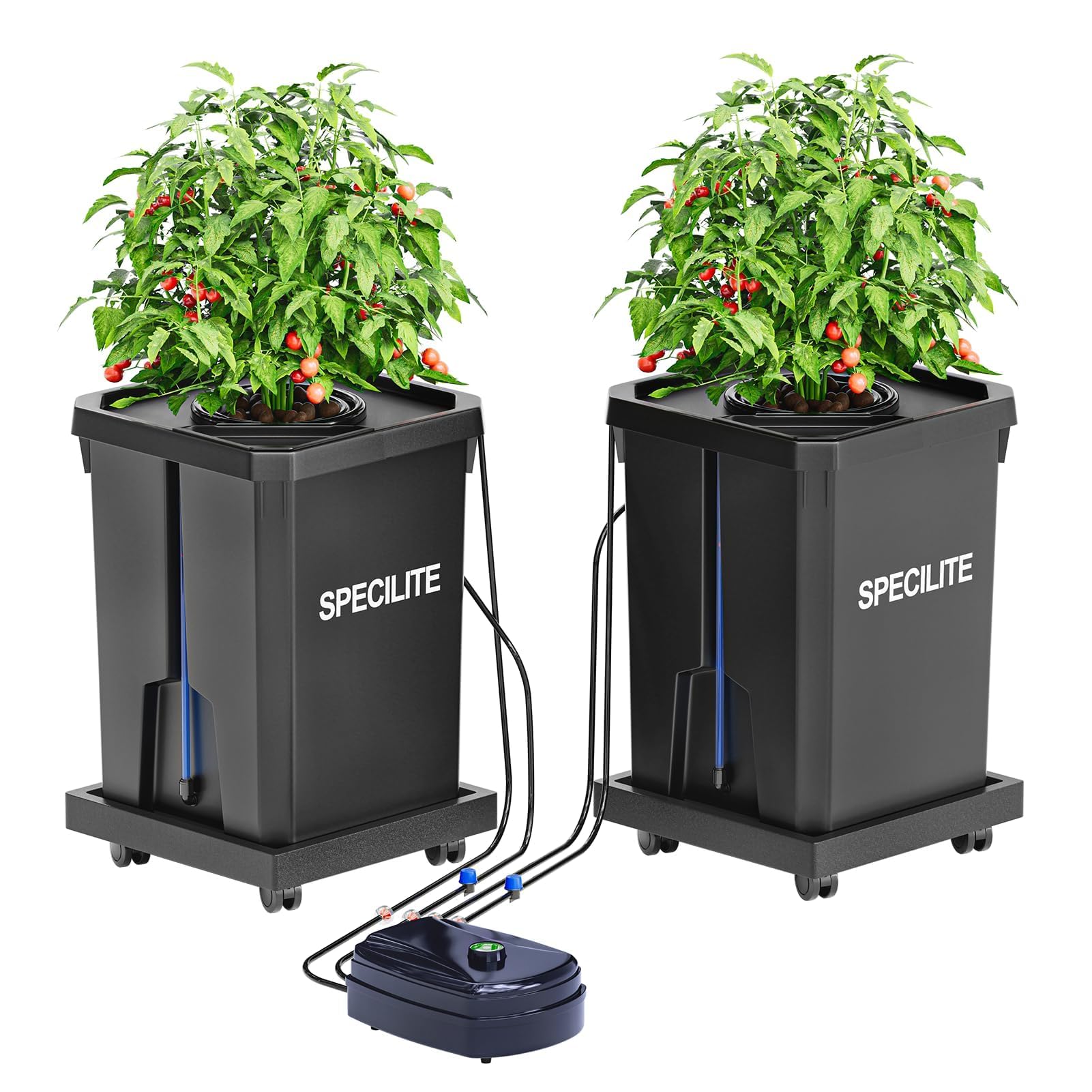
Deep water culture with a silent air pump (25–42 dB)
DWC suspends roots directly in oxygenated nutrient water. The only noise source is the air pump driving the airstone. Premium piezoelectric and magnetic-diaphragm pumps now ship with manufacturer ratings of 25–35 dB, and most stay under 45 dB even after a year of use if you isolate them on a foam pad. DWC supports a wider range of crops than passive methods and is generally the best bedroom-friendly active system. For a primer on how DWC compares with nutrient film technique, read NFT vs DWC.
Nutrient film technique (40–55 dB)
NFT relies on a small submersible pump cycling a thin film of nutrient over the roots. The pump itself is usually quiet, but the splash of returning water hitting the reservoir adds a measurable trickle sound. With a long return hose and a pump cycle timer, NFT can be made bedroom-tolerable, but it rarely beats DWC for raw silence.
Ebb-and-flow (50–65 dB)
Flood-and-drain rigs trigger a loud rush every few hours. Even with quiet pumps, the periodic gurgle and drain noise wakes light sleepers. Skip these for the bedroom.
Aeroponics (55–75 dB)
High-pressure misting cycles are inherently noisy and produce sharp on/off transients that are far more disruptive than steady ambient sound. Aeroponics belongs in a closet, basement, or garage, not next to your bed.
Comparison: bedroom-friendly hydroponic methods at a glance
| Method | Typical dB | Pump required? | Best for | Bedroom verdict |
|---|---|---|---|---|
| Kratky | 0–10 | No | Basil, lettuce, mint | Excellent — silent |
| Wick | 0–15 | No | Herbs, microgreens | Excellent — near-silent |
| DWC (silent air pump) | 25–42 | Yes (low-dB) | Most herbs, leafy greens | Very good — under 50 dB |
| NFT | 40–55 | Yes | Lettuce, herbs | Borderline |
| Ebb-and-flow | 50–65 | Yes | Fruiting crops | Not recommended |
| Aeroponics | 55–75 | Yes (high-pressure) | Research, fast growth | Avoid in bedrooms |
Specifications that actually determine bedroom noise
Manufacturer marketing copy almost always undersells real-world noise. When evaluating a quietest hydroponic system for bedroom herb growing, look past the headline dB number and audit these specifications individually.
Air pump rating and pump isolation
Air pumps are the single biggest noise source in any active hydroponic system. Look for pumps rated 35 dB or lower at one meter, and check that the manufacturer specifies a rubber or silicone suspension mount. A 25 dB pump bolted directly to a plastic reservoir can transmit vibration that reads 50+ dB at the bed. A foam mouse pad or a hanging strap eliminates 80% of structure-borne noise.
LED driver and fan type
Some integrated grow-light hoods include a small cooling fan that whirs continuously. Brushless DC fans run at 22–28 dB; cheaper sleeve-bearing fans climb to 38–45 dB within six months as the bearing wears. If you cannot confirm the fan type, look for fanless passive-cooled LED units. Our guide to the top LED grow lights of 2026 lists which models ship with fanless drivers.
Pump duty cycle and timer programmability
An NFT or drip system that runs continuously will outscore one that cycles loudly every fifteen minutes. Look for programmable pumps you can set to run while you are out of the room, then idle at night.
Reservoir material
Thin polypropylene reservoirs amplify pump vibration like a drumhead. Heavier injection-molded ABS, glass, or double-walled units are noticeably quieter even with the same pump.
Splash and drip geometry
Water returning from grow channels into the reservoir is a major noise contributor. A hose that terminates below the waterline eliminates the trickle entirely. Many bedroom-friendly DIY builds extend the return line two inches under the surface and pick up an instant 5–7 dB reduction.
Acoustic placement and treatment tips
Even the quietest hydroponic system benefits from thoughtful placement. A few practical tactics that consistently get bedroom setups under 45 dB at the headboard:
- Place the unit on a dense rubber mat or yoga block to decouple it from the floor.
- Keep at least 1.5 meters between the reservoir and your pillow.
- Position the system against an external wall rather than a shared wall with another bedroom.
- Hang the air pump from a hook with a bungee cord rather than resting it on the reservoir lid.
- Replace stock airline tubing with silicone tubing — it does not buzz when air passes through.
- Add a soft microfiber cloth between the lid and the reservoir to dampen panel resonance.
- If the room runs dry, a small bowl of water near the unit reduces high-frequency hiss perception.
For broader environmental tuning that pairs well with a quiet system, our notes on successful indoor herb gardening cover humidity, airflow, and light schedules in more depth.
Best herbs for ultra-quiet bedroom hydroponics
Quiet, low-power passive systems do their best work with short, leafy, fast-cycling herbs. The following thrive in Kratky, wick, and silent DWC builds:
- Basil — tolerates static reservoirs, harvest in 28–35 days.
- Mint — vigorous, forgiving, propagates from cuttings in any wick setup.
- Cilantro — prefers cooler bedroom temperatures than a hot grow tent.
- Parsley — slow start, then 6–8 months of continuous harvest.
- Chives — near-zero maintenance in a passive jar.
- Dill — best with a slightly taller reservoir to accommodate roots.
- Oregano and thyme — lower water demand, perfect for wick designs.
Avoid rosemary, lavender, and woody Mediterranean perennials in passive hydroponics — they prefer drier root zones and rarely repay the effort. Tomatoes, peppers, and strawberries are similarly poor bedroom candidates because they need stronger lights and louder fans to manage heat.
Budget vs. premium: where to spend
If you are building a sub-50 dB bedroom system from scratch, the spending priority is unambiguous: pay for the air pump first, the LED light second, the reservoir third, and the seed pods last. A $40 silent air pump will outlast and outperform a $15 generic pump three times over, and the difference at the pillow is night-and-day. Bargain LED hoods with sleeve-bearing fans are the most common bedroom regret. Pair a quiet pump with a passive-cooled light and you can keep the whole build under $200 while staying well below 40 dB. If you want a wider survey of complete units, our roundup of the best hydroponic systems of 2026 includes noise ratings for every featured model.
Frequently Asked Questions
What is the absolute quietest hydroponic system you can put in a bedroom?
A Kratky-method passive reservoir is the quietest option, producing essentially zero measurable noise above room ambient because it has no pump, fan, or moving parts. If you need an active system, a DWC tank with a piezoelectric air pump rated 30 dB or lower and suspended on a foam mount is the next quietest tier, typically reading 38–42 dB at one meter.
How loud is a typical AeroGarden or Click and Grow at night?
Most countertop smart gardens run at 38–48 dB depending on whether the LED driver fan is active and how full the reservoir is. The water pump itself usually cycles for only a few minutes per hour, but the fan can hum continuously. Place them at least four feet from the bed and they are generally tolerable for light sleepers.
Can I run a hydroponic system 24/7 in a bedroom without ruining my sleep?
Yes, provided the steady-state noise stays under 45 dB at the head of the bed and contains no sharp transients. Continuous low-frequency hum is far less disruptive than intermittent splashing or pump cycling. A silent DWC or passive system meets this requirement; ebb-and-flow generally does not.
Do I need a grow tent to keep noise down in a bedroom?
No. A grow tent can actually trap and reflect pump noise rather than absorb it. For bedroom builds, an open shelf with soft furnishings (curtains, rugs, upholstered furniture) in the room dampens sound more effectively than a reflective Mylar tent. Tents are useful for light control and humidity, not acoustics.
Are USB-powered hydroponic kits quieter than wall-powered ones?
Usually yes, because USB power limits pump and fan wattage, which in turn limits noise. The trade-off is reduced aeration and lower light output, so USB kits are best matched with low-demand herbs like basil and lettuce rather than fruiting crops.
How do I measure my hydroponic system's actual decibel level?
Download a free SPL meter app on your phone (NIOSH SLM is well calibrated), hold the phone one meter from the unit at ear height, and record the A-weighted reading after the system has been running for at least five minutes. Compare the reading with the system off to isolate the contribution of the hydroponic gear from ambient room noise.
Will a silent hydroponic system grow herbs as fast as a noisy one?
For leafy herbs, yes — growth rate is driven by light intensity, nutrient EC, and root zone oxygen, not by pump noise. A well-designed silent DWC with a properly sized airstone delivers the same dissolved oxygen as a louder pump; the difference is in pump efficiency, not output. Fruiting crops may benefit from more aggressive aeration, which is why they are usually grown outside the bedroom.
Key Takeaways
- Choosing the right quietest hydroponic system for bedroom herb growing means matching capacity and output ports to your actual devices
- Always check actual watt-hours (Wh), not just watts — runtime depends on Wh, not peak output
- Also covers: silent hydroponic system bedroom
- Also covers: low noise indoor herb garden
- Also covers: quiet water pump hydroponics
- Compare price-per-Wh across models to find the best value for your budget