If you are weighing general hydroponics maxigro vs jacks 321 for dorm microgreens, the short answer is this: Jack's 321 gives you the cleanest, most repeatable mineral profile for fast 7-to-14-day microgreen cycles, while MaxiGro is the cheaper, simpler one-bag option that still produces excellent trays of sunflower, pea, radish, and broccoli shoots in a dorm room. For a single student running one or two 1020 trays under a clip-on LED, MaxiGro at quarter-strength is the lowest-friction choice. For a more serious dorm grower who plans to sell trays to roommates, push sunflowers hard, or graduate to lettuce later, Jack's 321 is worth the small kitchen scale and the extra jug.
This guide walks through the chemistry, the dorm-specific constraints (no sink in your room, RA inspections, tiny shelves, dorm-power outlets), cost per tray, shelf life of opened bags, and which scenarios favor which nutrient. We will also cover when microgreens genuinely need a nutrient at all, since plenty of growers run plain water for the first harvest of fast crops.
Do microgreens even need nutrients in a dorm setup?
Microgreens are harvested at the cotyledon or first-true-leaf stage, usually 7 to 14 days from sow. The seed itself carries enough stored energy (endosperm or cotyledon reserves) to push the plant to harvest size for most fast crops: broccoli, radish, mustard, arugula, kale, cabbage, and most brassicas. For these, plain tap water or pH-adjusted water is genuinely sufficient, and most commercial microgreen farms confirm this in their own SOPs.
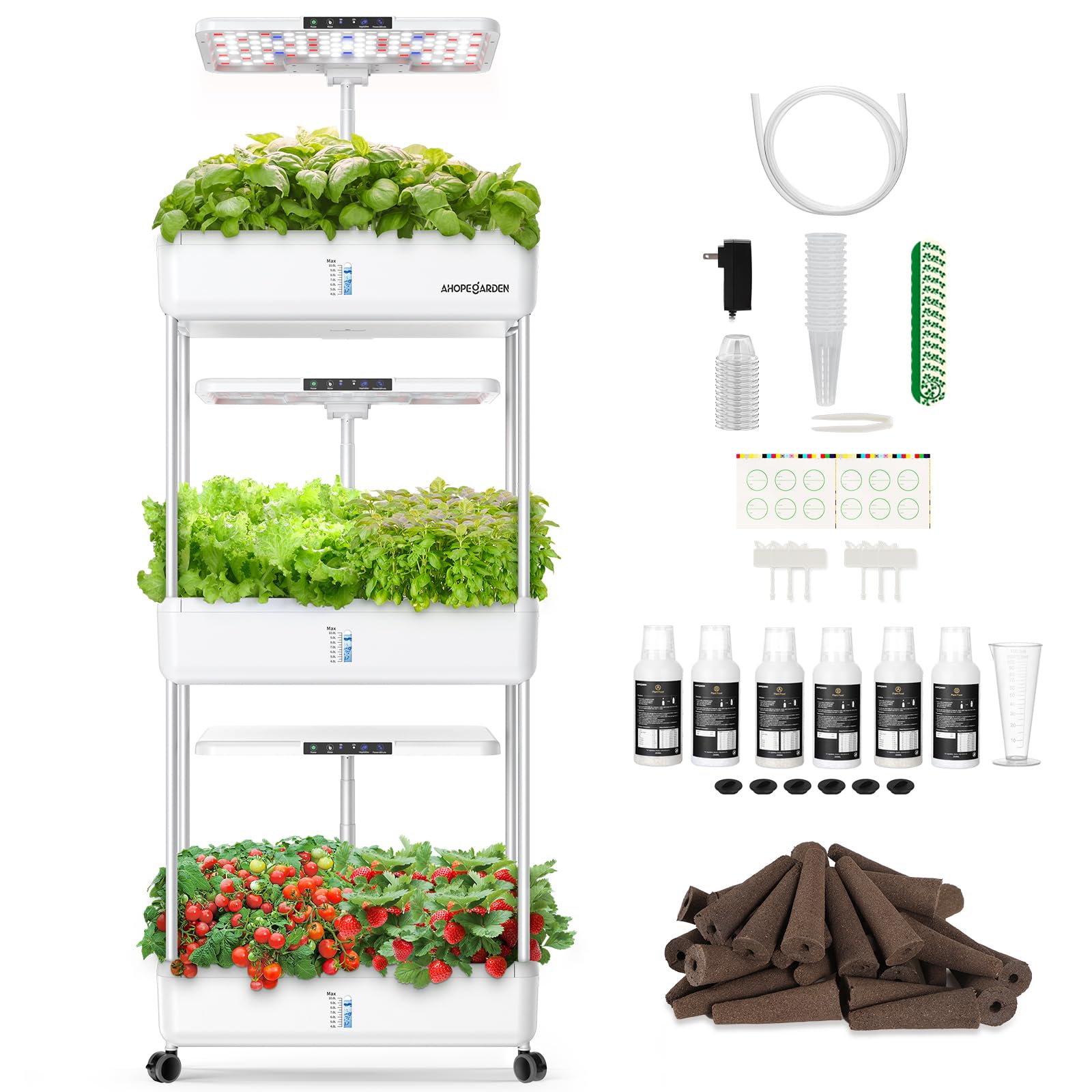
Where nutrients start to matter is the slower, larger-seeded crops: sunflower shoots, pea shoots, popcorn shoots, and wheatgrass. These run 10 to 16 days and put on serious biomass. A dilute nutrient feed at days 4 through 8 measurably increases yield, color, and stem thickness. It also helps if you are growing on an inert pad like hemp, jute, or coco — which most dorm growers do because soil is messy and often against housing rules. If you want the deeper background on why inert media changes the feeding picture, our coco coir vs soil comparison covers the trade-offs in detail.
So the real question of general hydroponics maxigro vs jacks 321 for dorm microgreens is mostly about the larger-seeded crops and about hedging your bets so a tray never stalls out.
What is General Hydroponics MaxiGro?
MaxiGro is a dry, one-part vegetative formula made by General Hydroponics. The NPK is roughly 10-5-14, and the bag includes calcium, magnesium, and a full chelated micronutrient package. You scoop, dissolve in water, and feed. There is no Part A and Part B to juggle, no separate calcium nitrate jug, and no mixing order to memorize. For a dorm grower with one shelf and a single 1-gallon jug, this is a serious advantage.
The trade-off is that a single-bag formula has to compromise. To keep calcium and phosphate from precipitating in the bag, MaxiGro uses calcium sulfate and other less-soluble forms. In practice you will see a small amount of undissolved residue at the bottom of your mixing jug. For microgreens this is irrelevant — you are not running a recirculating system that will clog — but it is worth knowing.
Why MaxiGro works for dorm microgreens
Cost per tray is low. A 2.2 lb bag of MaxiGro costs under $15 and at the quarter-strength microgreen rate (roughly 1/4 teaspoon per gallon) will feed dozens of 1020 trays before the bag is empty. The bag stores for years in a dorm closet because it is dry and sealed. You do not need a scale precise to the tenth of a gram — a measuring spoon is fine. And the formula is forgiving: if you mix slightly strong, microgreens shrug it off because they harvest before salt accumulation matters.
What is Jack's 321?
Jack's 321 is the popular shorthand for a three-part mixing ratio of JR Peters fertilizers: 3.6 grams per gallon of Jack's 5-12-26 Hydroponic, 2.4 grams per gallon of calcium nitrate (15.5-0-0), and 1.2 grams per gallon of Epsom salt (magnesium sulfate). The three salts are mixed in that order into the same jug of water — never combined as dry powders or as concentrates — to avoid precipitation of calcium phosphate and calcium sulfate.
The resulting nutrient solution is genuinely beautiful: complete, balanced, fully soluble, with crisp calcium and magnesium ratios that most commercial lettuce and microgreen operations rely on. It is also the cheapest professional-grade nutrient per gallon of finished solution that you can buy retail. A 25 lb bag of Jack's 5-12-26 will outlast a college career, but you can also buy the trial size or repackaged 1 lb bundles that fit a dorm.
Why Jack's 321 might be overkill for dorm microgreens
You need a kitchen scale that reads to 0.1 gram, three separate containers, and the discipline to add salts in order. You also need to store calcium nitrate, which is hygroscopic and will clump into a brick if you leave the bag open in a humid dorm bathroom. For a single tray of broccoli microgreens that finishes in eight days on plain water, the overhead is hard to justify.
MaxiGro vs Jack's 321 comparison table
| Factor | General Hydroponics MaxiGro | Jack's 321 |
|---|---|---|
| Parts to mix | 1 (one bag) | 3 (Jack's 5-12-26 + CalNit + Epsom) |
| Scale required | Measuring spoon is fine | 0.1 g kitchen scale strongly recommended |
| Cost per finished gallon (microgreen strength) | ~$0.02 | ~$0.03 |
| Cost per 1020 tray over full cycle | ~$0.05-$0.10 | ~$0.08-$0.15 |
| Dorm storage footprint | One 2.2 lb bag | Three smaller bags or jars |
| Shelf life of opened bag | 2+ years if kept dry | CalNit clumps within months in humidity |
| Precipitation in jug | Mild sediment | None if mixed in correct order |
| EC at microgreen strength | ~0.6-0.8 mS/cm | ~0.8-1.2 mS/cm (tunable) |
| Best for | Casual one-tray-a-week dorm grows | Multi-tray, multi-crop dorm operations |
| Risk of dorm mess | Low | Medium (powders, spills) |
The dorm-specific factors nobody mentions
Water source matters more than the brand
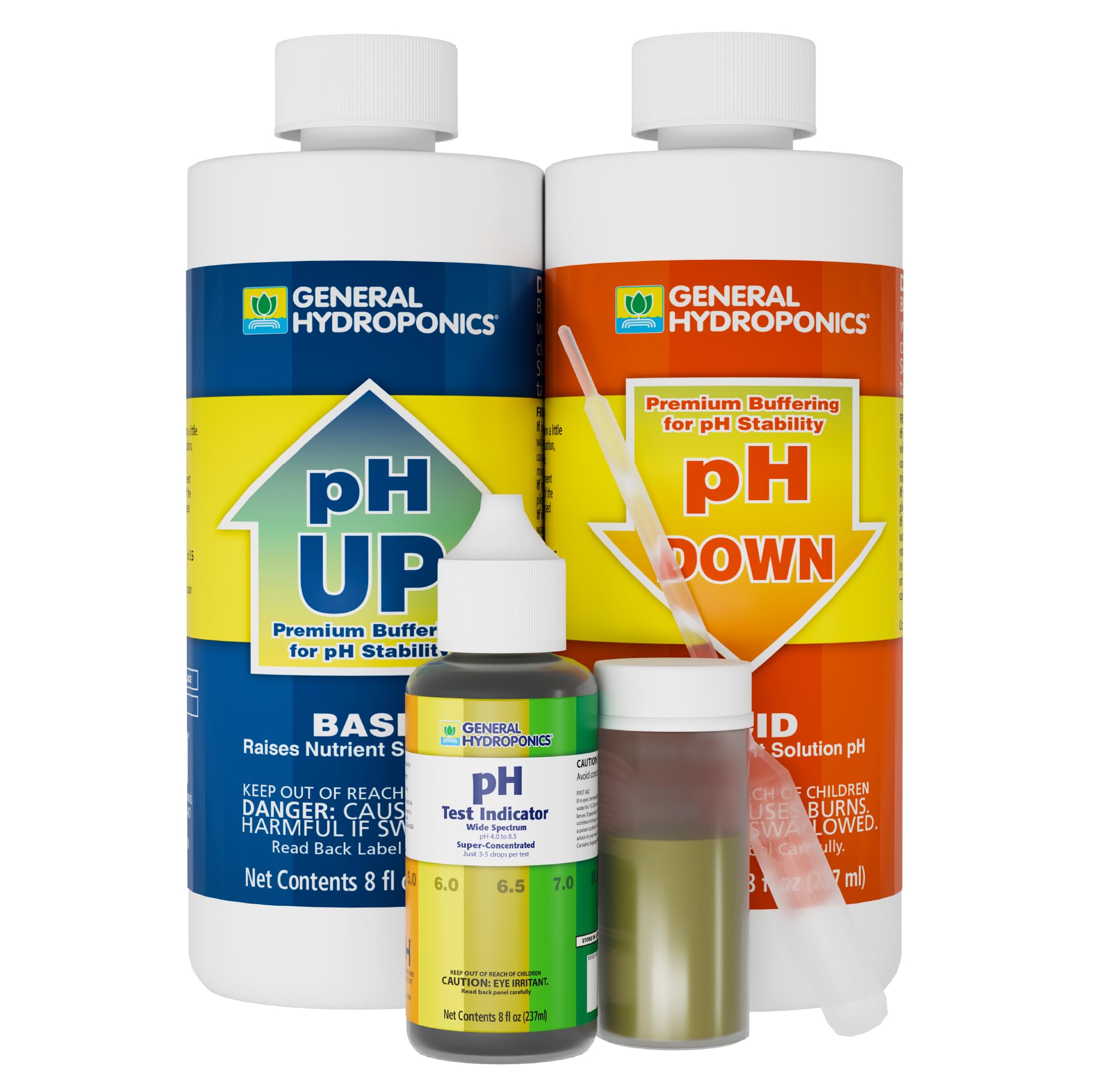
Dorm tap water varies wildly. Some campuses run softened water that is high in sodium and bad for microgreens. Others run hard well water with 200+ ppm of calcium and bicarbonates that buffer pH up to 8.0 and lock out iron. Before you obsess over MaxiGro versus Jack's, get a cheap TDS pen and check your dorm water. If you see over 300 ppm out of the tap, switch to a gallon of distilled from the campus convenience store for mixing. A good pH and EC meter pays for itself by the second tray.
Tray volume is tiny, so total nutrient cost is tiny
A 1020 microgreen tray with a humidity dome needs maybe 200 mL of nutrient solution for bottom watering over its entire 10-day life. That is a rounding error compared to the cost of seed. Sunflower seed for shoots runs $8 to $14 per pound, and you will burn through it a lot faster than any nutrient bag. Optimize for seed quality first.
Dorm rules and roommates
MaxiGro smells faintly of mineral salts but is otherwise neutral. Jack's calcium nitrate has almost no odor but the bag is heavy and looks suspicious if your RA is paranoid about labs in dorms. Both are fully legal, food-safe fertilizers, but if you anticipate scrutiny, MaxiGro in its branded retail bag is the lower-friction choice.
Lighting still dominates yield
No nutrient program saves a tray grown under a 6-watt USB grow lamp. Microgreens need 100 to 200 µmol/m²/s at canopy for 14 to 16 hours per day. A small clip-on full-spectrum LED is the bare minimum, and a single bar light over a 1020 tray is much better. Our 2026 LED grow light guide covers the dorm-friendly options that pull under 30 watts at the wall.
How to actually mix each one in a dorm
MaxiGro dorm protocol
Fill a clean 1-gallon jug with room-temperature water (let dorm tap sit for an hour to off-gas chlorine). Add roughly 1/4 teaspoon of MaxiGro. Cap, shake for 30 seconds. Check pH if you have a meter — target 5.8 to 6.2. Bottom-water the tray by pouring about 100 mL into the bottom 1020 tray under your seedling tray. Done. Refrigerate the leftover mixed solution for up to a week.
Jack's 321 dorm protocol
Fill a 1-gallon jug with water. Weigh 3.6 g of Jack's 5-12-26 and dissolve completely. Weigh 2.4 g of calcium nitrate and add, dissolve completely. Weigh 1.2 g of Epsom salt and add. Cap, shake. Target pH 5.8 to 6.2. For microgreen strength, cut the whole recipe to half rates (1.8 / 1.2 / 0.6 grams per gallon). Store dry salts in airtight jars with a silica packet — especially the calcium nitrate.
Which one should you actually buy?
Buy MaxiGro if
You are growing one or two trays a week, mostly brassicas and peas, on hemp pads or coco. You do not own a scale. You want one bag that lives in a shoebox under your bed for two years. You want to start tonight without watching a 20-minute YouTube tutorial on mixing order.
Buy Jack's 321 if
You are running four or more trays at a time, selling to the floor, pushing sunflowers and pea shoots hard, or planning to graduate to dorm lettuce or herbs after winter break. The cost savings, EC precision, and crop response on heavy-feeding microgreens justify the extra setup. It is also the better foundation if you later expand into a small DWC bucket or Kratky jar — see our NFT vs DWC explainer for what that progression looks like.
Buy neither, at first, if
You have never grown microgreens. Start with plain pH-adjusted tap water and broccoli or radish seed. Get one clean tray to harvest. Then introduce nutrients on tray two. Most stalled first trays in dorms are lighting or watering problems, not nutrient problems.
A note on the nutrient/lighting tradeoff
Spending an extra $20 upgrading from MaxiGro to a Jack's 321 kit will not double your yield. Spending that same $20 going from a 10-watt clip light to a proper 30-watt bar light will. If your dorm budget is tight, prioritize light, then seed quality, then a basic pH meter, then nutrients last. Our beginner indoor gardening guide walks through that priority order with photos.
Frequently Asked Questions
Can I grow microgreens in a dorm with just tap water and no nutrients?
Yes, for most brassicas (broccoli, radish, mustard, kale, cabbage, arugula). The seed carries enough stored energy for a full 8 to 12 day cycle. Plain pH-adjusted tap water produces excellent trays. Add nutrients only when you move to sunflower, pea, popcorn, or wheatgrass shoots, or when you want noticeably bigger brassica yields.
What EC and pH should I target for dorm microgreens?
Target EC 0.6 to 1.2 mS/cm and pH 5.8 to 6.2. Microgreens are harvested before salt buildup matters, so the EC ceiling is generous. Use the lower end (0.6) for delicate greens like amaranth and the higher end (1.2) for sunflower shoots that visibly respond to more nitrogen and calcium.
Does MaxiGro work for pea shoots and sunflower shoots specifically?
Yes. At a slightly higher rate (1/2 teaspoon per gallon instead of 1/4) MaxiGro produces excellent pea and sunflower shoots. The 10-5-14 NPK has enough nitrogen and potassium for fast biomass, and the calcium and magnesium prevent the leggy, pale stems that plain water can produce on these heavy feeders.
Is Jack's 321 worth the mixing effort for only one or two trays?
Honestly, no. The per-tray cost difference is pennies. Jack's 321 starts to make sense when you are running four or more trays per week, when you want very repeatable EC for selling product, or when the same nutrient will also feed a lettuce or herb side project. For a casual one-tray-a-week dorm grow, MaxiGro is the rational pick.
How do I store calcium nitrate in a humid dorm?
Transfer it from the original bag into a glass jar with a tight gasket lid. Drop in a food-safe silica gel packet (the kind that comes with shoes or vitamins). Keep the jar away from the bathroom and away from any window that fogs in winter. If it clumps anyway, you can still use it — break up clumps with a clean spoon, but weighing accuracy will drop.
Will either nutrient leave a residue or smell on my dorm shelf?
Neither has a meaningful odor at microgreen dilution. Both can leave a faint mineral crust on the rim of plastic trays after repeated use, which wipes off with a vinegar-water spray. If your dorm contract is strict about staining, use a sacrificial cookie sheet under the 1020 tray as a drip catcher.
Can I use the same nutrient mix for microgreens and for a small herb jar later?
Yes — that is actually the strongest argument for Jack's 321. MaxiGro is fine for microgreens but General Hydroponics intends it as the vegetative side of a multi-part system (MaxiBloom is the partner). Jack's 321, by contrast, is a complete standalone formula that takes lettuce, basil, and dorm-windowsill peppers all the way to harvest. One nutrient, every crop.
The bottom line
For the specific question of general hydroponics maxigro vs jacks 321 for dorm microgreens, the practical answer for most students is MaxiGro. It is cheaper to start, simpler to mix, more forgiving of dorm chaos, and absolutely capable of producing photo-worthy trays of any common microgreen. Move to Jack's 321 only when you have outgrown the casual hobby phase — when you are running multiple trays per week, when you care about repeatable EC, or when you are about to expand into lettuce, herbs, or a small Kratky jar that will live with you all four years.
Key Takeaways
- Choosing the right general hydroponics maxigro vs jacks 321 for dorm microgreens means matching capacity and output ports to your actual devices
- Always check actual watt-hours (Wh), not just watts — runtime depends on Wh, not peak output
- Also covers: maxigro dorm microgreens
- Also covers: jacks 321 small batch nutrients
- Also covers: cheap hydroponic nutrients for students
- Compare price-per-Wh across models to find the best value for your budget