If you are weighing hydrobuddy vs nutrient calculator app home growers options for mixing your own custom recipes at the kitchen counter, the short answer is this: HydroBuddy is a free desktop program that solves the chemistry behind any target PPM/EC profile using raw fertilizer salts, while phone-based nutrient calculator apps focus on dosing ratios for pre-made bottled lines (General Hydroponics, Advanced Nutrients, Athena, Jack's, etc.). HydroBuddy is the better tool when you buy bulk salts and want exact elemental control. A nutrient calculator app is the better tool when you already own a two- or three-part bottled lineup and just need to scale doses to your reservoir size and growth stage. Many serious home recipe mixers end up using both.
This guide walks through what each tool actually does, where they overlap, and how to decide which belongs on your bench. We will also cover accuracy expectations, the learning curve, common pitfalls, and the supporting gear (meters, scales, reservoirs) that determines whether your mixed solution actually matches what the software says it should.
When shopping for hydrobuddy vs nutrient calculator app home growers, it pays to compare specs, capacity, and real-world runtime before committing.
What HydroBuddy Actually Is
HydroBuddy is an open-source nutrient calculator originally written by Dr. Daniel Fernandez, a PhD chemist who specializes in hydroponic formulation. It runs on Windows, macOS, and Linux as a desktop application. Instead of dispensing pre-bottled solutions, it solves a linear system: you tell it the elemental targets you want (nitrogen, phosphorus, potassium, calcium, magnesium, sulfur, and the micronutrients in ppm), you tell it which raw salts you have on hand (calcium nitrate, potassium nitrate, monopotassium phosphate, magnesium sulfate, etc.), and it tells you how many grams of each salt to weigh out to hit those targets in a given volume of water.
Under the hood, HydroBuddy treats the problem as a constrained optimization. The software ships with a small library of common formulations — Hoagland, modified Steiner, lettuce-specific, tomato-specific — but the real value is creating your own targets and watching the salt weights update in real time. For home growers who order 25 lb bags of fertilizer salts from a hydroponic supplier or agricultural distributor, the cost per liter of finished nutrient drops dramatically compared with bottled lines.
What Nutrient Calculator Apps Actually Are
The phone apps marketed as nutrient calculators — the official feeding-schedule apps from major brands, plus third-party tools — are dosing assistants, not chemistry engines. You pick a brand, a feed chart (aggressive, medium, light), a grow stage (seedling, veg week 2, flower week 5), and a reservoir volume. The app returns milliliters per gallon for each bottle in the lineup, often with reminders for pH adjustment, Cal-Mag supplementation, or bloom boosters.
The strength of these apps is convenience. You do not need to know that calcium nitrate is 19% N and 15.5% Ca, or that mixing it with sulfates causes precipitation. The manufacturer has already engineered around those constraints in the bottle. You also do not need a precision scale — you measure liquid milliliters, which is forgiving.
The weakness is flexibility. If you want to push calcium higher for blossom-end rot prevention in tomatoes, or trim nitrogen in late flower for a cleaner finish, a bottled-line app cannot meaningfully help. You are locked into whatever ratios the bottle delivers.
HydroBuddy vs Nutrient Calculator App Home Growers Comparison
| Feature | HydroBuddy | Nutrient Calculator App |
|---|---|---|
| Cost | Free | Free (brand-tied) |
| Platform | Desktop (Win/Mac/Linux) | Mobile (iOS/Android) |
| Inputs needed | Raw salts, elemental targets | Brand, stage, reservoir size |
| Outputs | Grams per salt per liter | mL per bottle per gallon |
| Precision scale required | Yes (0.01 g) | No |
| Cost per liter of nutrient | Very low | Moderate to high |
| Learning curve | Steep (chemistry literacy helps) | Minimal |
| Recipe flexibility | Total — any ratio possible | Locked to brand ratios |
| Best for | Bulk salt mixers, recipe tuners | Bottled-line users, beginners |
When HydroBuddy Wins
HydroBuddy is the right choice when you have outgrown bottled nutrients and want to control your formulation at the elemental level. Common triggers for the switch:
- You are running more than one or two reservoirs and the bottle cost has become a real line item.
- You grow a crop that the major brands do not specifically target — strawberries, microgreens at scale, leafy Asian greens, specific cultivars of tomato or pepper that respond to non-standard ratios.
- You want to dial in calcium and magnesium independently rather than relying on a Cal-Mag supplement.
- You are experimenting with Steiner ratios, modified Hoagland, or a custom recipe inherited from a research paper.
- Your tap or well water has unusual baseline mineral content and you want to subtract it from the target.
The chemistry knowledge requirement is real but not insurmountable. The HydroBuddy documentation and Fernandez's blog walk through the common gotchas: never combine calcium-containing salts with sulfate or phosphate stocks (they precipitate as gypsum or calcium phosphate), always make a separate Stock A (calcium nitrate, potassium nitrate) and Stock B (everything else), and verify your final EC against the calculated EC before feeding plants.
When the App Wins
A nutrient calculator app is the right choice when your goals are convenience, repeatability, and a known-good baseline. If you are running an AeroGarden countertop unit, a Click and Grow, or a small DWC bucket of basil, the marginal cost of bottled nutrients is trivial and the time savings are significant. Apps also win when:
- You are new to hydroponics and need a structured feed chart that someone else has validated.
- You travel and want a partner or housemate to be able to top off the reservoir without a chemistry lesson.
- You are growing a single crop on a manufacturer-supported chart (most apps have lettuce, tomato, and cannabis schedules dialed in).
- Your reservoir volume is small enough that even premium bottled cost is under a dollar per refill.
If you are still deciding whether hydroponics is even the right path for you, the beginner's guide to indoor gardening covers the broader system choices before you commit to any nutrient strategy.
Accuracy: What Each Tool Can and Cannot Guarantee
HydroBuddy outputs are only as accurate as your inputs. The four sources of drift between calculated and actual solution are: salt purity (technical-grade calcium nitrate is often 15.5% Ca, not 19%), scale precision (a 0.1 g error on a 2 g micronutrient weight is 5%), water baseline (ignoring 80 ppm of calcium in your tap water means you overshoot calcium by that amount), and mixing order (precipitation reduces the elements that actually stay in solution). A 0.01 g jewelry-grade scale and a quality EC meter close most of the gap.
Nutrient calculator apps are accurate in the sense that the manufacturer has tested the ratios. They are inaccurate in the sense that your water, your light intensity, your crop, and your growth stage all shift the optimal ratio, and the app cannot see any of that. The app tells you what the bottle delivers; whether that matches what the plant wants is a separate question.
The Supporting Gear That Decides Whether Either Tool Works
Software output is theoretical. Whether your reservoir actually hits the target depends on your measurement tools. A few categories matter regardless of which path you choose:
pH and EC Meters
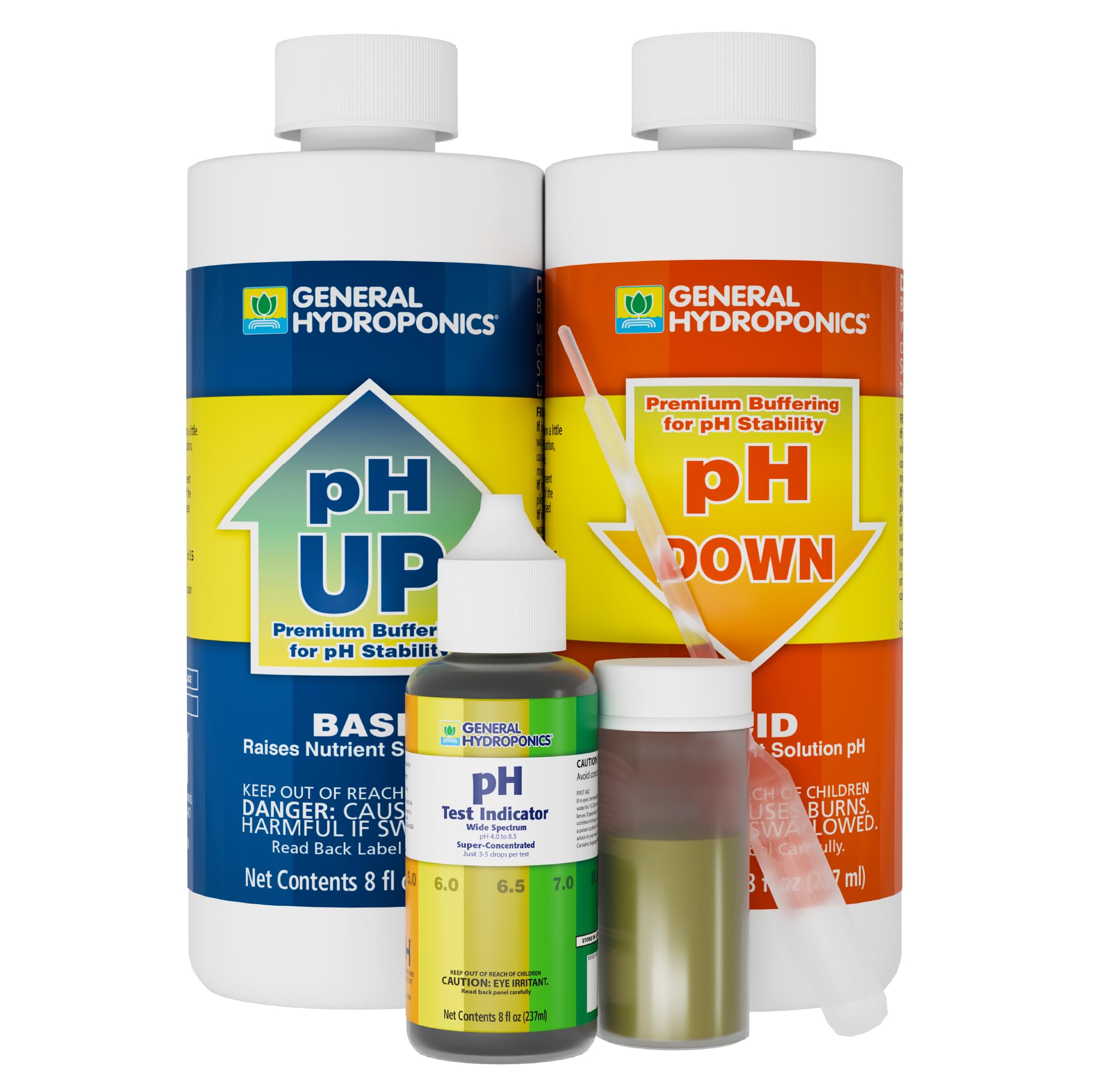
An EC meter is the verification step that closes the loop between calculator output and reservoir reality. If HydroBuddy says your solution should hit 1.8 mS/cm and your meter reads 1.4, something is off — usually salt purity, water baseline, or undissolved solids. A pH meter is non-negotiable for any hydroponic system because nutrient availability changes sharply between pH 5.5 and 6.5. Our roundup of the best pH and EC meters for 2026 covers the calibration discipline that keeps these meters honest.
Precision Scale (HydroBuddy Only)
For raw salts, a 0.01 g resolution jewelry scale with at least 200 g capacity is the minimum. Cheaper kitchen scales at 1 g resolution will work for macronutrients but cause real errors on micronutrient weights, where you may be measuring tenths of a gram of chelated iron or boron.
Stock Solution Containers
Most home growers using HydroBuddy mix concentrated stock solutions (typically 100x or 200x) in 1- to 5-liter jugs rather than weighing fresh salts every reservoir change. Two opaque HDPE jugs labeled Stock A and Stock B will last years.
Reference Reading
Before you commit to either tool, the guide to hydroponic nutrient solutions covers the elemental fundamentals — what each macro and micronutrient does, deficiency symptoms, and target ranges by crop — that will make HydroBuddy outputs comprehensible rather than mysterious.
A Realistic Hybrid Workflow
Most home recipe mixers who get serious end up using both tools. The pattern looks like this: bottled nutrients with the brand app for the first season while learning EC, pH, and crop response. Then HydroBuddy for a custom base recipe matched to crop and water source, with the brand app retained for occasional bottle-based supplements (bloom boosters, silica, beneficial microbes) that are awkward to formulate from raw salts. The hybrid keeps the convenience of bottled supplements while capturing the cost and flexibility wins of bulk salts for the bulk of the recipe.
If you are still building out your system before tackling nutrient strategy, the hydroponic systems buying guide walks through reservoir sizing, system type (DWC, NFT, ebb and flow), and how those choices affect how much nutrient solution you will mix per week.
Frequently Asked Questions
Is HydroBuddy still maintained in 2026?
Yes. HydroBuddy has been actively updated for over a decade and the open-source codebase continues to receive improvements. The interface looks dated compared with modern apps, but the underlying chemistry engine is sound and the formulation database has expanded over the years. Dr. Fernandez's blog at scienceinhydroponics.com remains the canonical companion resource.
Can a nutrient calculator app handle custom recipes?
Most brand-specific apps cannot. They are designed to scale doses of their own bottled lineup. A handful of third-party calculator apps offer custom ratio inputs, but none match HydroBuddy's elemental-level control with raw salts. If you want to define your own recipe and have software solve the salt weights, HydroBuddy is essentially the only mature consumer-grade option.
Do I need to be a chemist to use HydroBuddy?
No, but you do need to understand a few basics: which salts precipitate when mixed together (calcium plus sulfate, calcium plus phosphate), why stock A and stock B exist, and how to read a target recipe in ppm. A weekend of reading the HydroBuddy documentation and one trusted hydroponic chemistry primer is usually enough to start mixing safely.
Which is cheaper over a full grow season?
Raw salts via HydroBuddy are dramatically cheaper at scale. A 25 lb bag of calcium nitrate at agricultural pricing produces hundreds of liters of finished nutrient for the cost of a single bottle of premium bloom nutrient. The crossover point — where the salt investment pays back the time learning curve — is typically two or three reservoirs of meaningful size, or one full season of any system larger than a countertop unit.
Will HydroBuddy work for organic or living soil setups?
No. HydroBuddy is built for mineral salt hydroponics. Organic inputs (fish hydrolysate, kelp, compost teas, guano) have variable elemental content and do not behave like soluble salts. For organic hydroponics or living soil, a bottled-line app or a soil-test-driven approach is more appropriate. Coverage of the soil side lives in our coco coir vs soil comparison.
What about water with high baseline EC?
This is one of HydroBuddy's strongest features. You can input your water analysis (calcium, magnesium, sodium, sulfate, bicarbonate ppm from a lab report) and the software subtracts those baselines from your target. A bottled-line app cannot do this — it assumes you start from near-zero RO water, which is why growers on hard well water often see calcium and magnesium toxicity on stock feed charts.
Can I switch between the two mid-grow?
Yes, but flush the reservoir and reset between systems. The two approaches produce different ratios and mixing leftover bottled solution with a custom salt recipe makes EC and pH troubleshooting nearly impossible. Drain, rinse, and start the new recipe at the next scheduled reservoir change.
The Bottom Line
For convenience, repeatability, and a low cognitive load, a nutrient calculator app paired with a quality bottled line is the right tool. For cost, flexibility, and elemental control — especially as your grow scales up or your crops get pickier — HydroBuddy is the right tool. The hybrid path, app for supplements and HydroBuddy for the base recipe, is what most experienced home recipe mixers end up running. Whichever path you choose, the meters and discipline matter more than the software: a perfect calculation poured into an uncalibrated reservoir produces the same disappointing harvest as a guessed-at recipe poured into a well-tuned one.
Key Takeaways
- Choosing the right hydrobuddy vs nutrient calculator app home growers means matching capacity and output ports to your actual devices
- Always check actual watt-hours (Wh), not just watts — runtime depends on Wh, not peak output
- Also covers: HydroBuddy review home growers
- Also covers: custom nutrient recipe software
- Also covers: DIY hydroponic nutrient calculator
- Compare price-per-Wh across models to find the best value for your budget