The kratky mason jar hydroponics for renters no electricity method is the simplest passive way to grow lettuce, herbs and leafy greens on a sunny windowsill without pumps, timers, or wall outlets. You fill a quart mason jar with nutrient solution, suspend a net cup with a seedling at the top, and let the plant drink the water down. As the level drops, an air gap forms below the roots, giving them oxygen for free. No electricity bill, no landlord permission, no drilling, and no noisy equipment — just a jar, a lid with a hole, and a south- or east-facing window.
This guide walks through exactly how to set up a Kratky jar on a rental windowsill, which crops actually finish in a jar (and which fail), how to light-proof the glass against algae, and what to buy if you want a turnkey kit. It is written for apartment dwellers, dorm students, RV residents, and anyone whose lease or wiring rules out plug-in hydroponic gardens.
The best kratky mason jar hydroponics for renters no electricity for your situation depends on how you plan to use it and where.
Why the Kratky method is the best fit for renters with no outlet access
Dr. B.A. Kratky published the non-circulating hydroponic technique at the University of Hawaii in the 1990s as a way to grow lettuce in remote locations without electricity. The principle is brutally simple: a sealed reservoir holds nutrient solution, the roots split into a wet portion (which absorbs water and minerals) and a dry portion above the water line (which absorbs oxygen from the widening air gap). No air stone, no recirculation pump, no drip emitter.

For a renter, that translates to a list of things you do not need: no extension cords snaking across a kitchen counter, no GFCI outlet near water, no humming pump that annoys a roommate at 2 a.m., no monthly kilowatt cost, and no equipment you have to disassemble at move-out. A quart mason jar weighs under three pounds full and lifts off the sill in seconds when the landlord shows up for an inspection.
Compared to wick systems, ebb-and-flow trays, or deep water culture buckets, Kratky jars also win on space. A standard windowsill 4 inches deep can hold four to six wide-mouth quart jars in a row, each growing a head of butter lettuce or a thick bush of basil. If you want to see how the passive Kratky approach stacks up against active hydroponics with pumps, our breakdown of NFT vs DWC systems shows where electricity becomes unavoidable.
What you actually need: the renter-friendly Kratky shopping list
You can build a working Kratky mason jar for under $15. The non-negotiable components are six items, and every one of them fits in a small Amazon order or a single trip to a hardware store.
- Wide-mouth quart mason jars — the 86 mm opening matches standard 3-inch net cups exactly. Pint jars work for basil and small herbs; half-gallon jars carry full-size romaine to harvest.
- 3-inch net cups — the slotted plastic baskets that hold the growing medium and let roots drop into the reservoir.
- Hydroton (expanded clay pebbles) or rockwool starter cubes — the inert medium that supports the seedling stem.
- General-purpose hydroponic nutrients — a two-part or three-part formula like MasterBlend, FloraSeries, or Jack's 321. Skip houseplant fertilizer; it lacks calcium and the correct nitrogen form.
- A pH test kit or pen — leafy greens want 5.5 to 6.5. Tap water often runs 7.5+ and locks out nutrients.
- Aluminum foil, black duct tape, or a sock — to wrap the jar and block light from the reservoir. Algae is the #1 killer of windowsill Kratky setups.
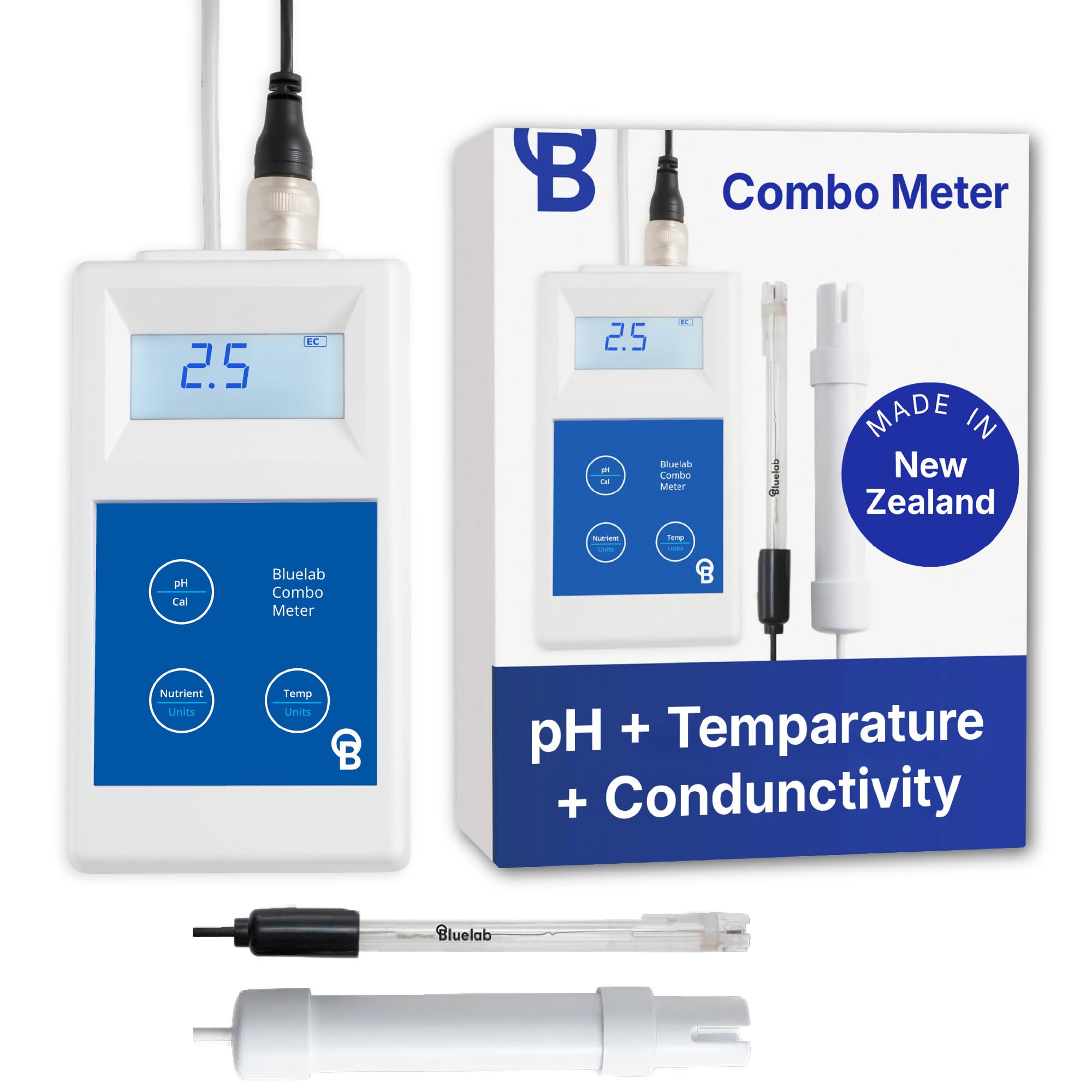
That is the whole list. If you want to upgrade later, a cheap TDS/EC meter helps you mix nutrients accurately — our roundup of the best pH and EC meters for 2026 covers pocket pens that run on watch batteries (still no wall outlet required).
Step-by-step: building your first windowsill Kratky jar
Total active time is about 15 minutes. The plant then grows itself for 4 to 8 weeks.
- Light-proof the jar. Wrap the outside in aluminum foil, then a layer of black electrical tape, or slide an old sock over it. Leave the top inch uncovered if you want to peek at the water level. Light hitting nutrient water grows algae within 72 hours.
- Mix nutrient solution. Fill the jar with room-temperature filtered or dechlorinated tap water. Add nutrients per the manufacturer's seedling rate (usually half-strength) and stir. Adjust pH to 5.8 to 6.2.
- Set the water line. Fill until the water just touches the bottom of the net cup when the lid is on. This is critical — the roots need to be wet at the start but the cup itself should not be submerged.
- Seat the seedling. Drop a rockwool cube containing a 2-to-3-week-old lettuce, basil, or kale seedling into the net cup. Pack hydroton around it to hold it upright. Roots should already be visible poking out the bottom of the cube.
- Place on the sill. South-facing windows give the fastest growth; east-facing windows still finish lettuce and most herbs. Rotate the jar 90 degrees every two days so the plant grows straight instead of leaning into the glass.
- Walk away. Do not top up the water. The expanding air gap between the falling water line and the net cup is the entire point of the Kratky method — that is where the roots breathe.
If your apartment has a window so dim that even Kratky lettuce stretches and flops, you are not actually a Kratky candidate — you need supplemental light, and at that point you may as well plug in a full kit. Compare options in our guide to choosing grow lights for indoor plants.
Which crops actually finish in a mason jar
Not every plant is happy in a quart of static water. Match the jar size to the crop or you will get bolt, root rot, or a stunted runt.
| Crop | Recommended jar size | Time to harvest | Renter difficulty |
|---|---|---|---|
| Butter / loose-leaf lettuce | Quart (32 oz) | 5-6 weeks | Easiest |
| Romaine | Half-gallon (64 oz) | 6-8 weeks | Easy |
| Basil | Pint or quart | 4 weeks to first cut, then continuous | Easy |
| Cilantro / dill | Quart | 4-5 weeks (bolts fast) | Medium |
| Kale / Swiss chard | Half-gallon | 6-8 weeks | Medium |
| Spinach | Quart | 5 weeks (cool window only) | Medium |
| Mint / chives | Quart | Perpetual | Easy |
| Strawberries | Half-gallon | Possible but finicky | Hard |
| Tomatoes / peppers | Not recommended in jars | Need 5+ gallons | Skip |
Leafy greens are the sweet spot. Fruiting plants drink too much water too fast and will drain a mason jar in days. If peppers or tomatoes are your goal, you are looking at a different system entirely — and probably an air pump, which defeats the no-electricity premise.
The four things that kill renter Kratky jars (and how to avoid them)
1. Algae from light leaks
Clear glass plus nutrient water plus a sunny window equals a green slime party. Wrap the jar completely. Check the inside after week two — if you see green fuzz on the glass below the waterline, re-wrap and scrub at the next refill.
2. Water temperature swings on the windowsill
South-facing summer windows can push reservoir temps past 80°F, which crashes dissolved oxygen and invites root rot (pythium). Move jars 6 inches back from the glass in summer, or switch to east-facing exposure. In winter, drafty single-pane windows can drop jars to 50°F and stall growth — slide a cork coaster or kitchen towel under the jar to break the cold conduction.
3. Topping off the water
This is the most common beginner mistake. Adding water back to the original line drowns the roots that have adapted to breathe air. Only top up if the plant is clearly under-sized for the jar and the reservoir runs dry before harvest — and then only add enough to wet the lowest roots, not to refill.
4. Wrong nutrients
Miracle-Gro and other soil fertilizers lack calcium and use the wrong nitrogen form. Lettuce in soil fertilizer will tip-burn within two weeks. Use a true hydroponic blend; see our guide to the best hydroponic nutrient solutions for renter-friendly small bottles that do not expire before you finish them.
If you want a kit instead: the renter-friendly upgrade path
Some renters discover after a Kratky jar or two that they want more lettuce, more varieties, or a system that handles winter when no window is bright enough. The honest answer is: once you need supplemental light, you need an outlet. If that is a deal-breaker, stay on the windowsill with Kratky jars and add more of them. If you have at least one outlet free, a small countertop system with built-in lighting is the natural next step. Our comparison of AeroGarden vs Click and Grow and the broader best indoor hydroponic systems for 2026 roundup both cover apartment-friendly picks under 10 watts of draw.
For pure Kratky scale-up without electricity, the cheapest move is to buy a 12-pack of wide-mouth quart jars and a 25-pack of 3-inch net cups, then run six jars on each of two windowsills. Twelve heads of staggered lettuce equals one fresh salad per week, perpetually, on zero watts.
Common renter-specific worries answered
Will the jars leave water rings on the sill? Set each jar on a cork or silicone coaster — both are cheap and protect the paint. Can you do this in a dorm? Yes; mason jars are not on most prohibited-items lists, unlike grow lights with cords. Will fruit flies show up? Only if you let the medium dry and crack at the top of the net cup; a thin layer of hydroton seals the surface and keeps flies out. Does the landlord care? In nine out of ten leases, a jar of lettuce on a windowsill is indistinguishable from a houseplant.
If you want to expand the broader skill set beyond the jar — seed starting, transplant timing, pest control without sprays — our beginner's guide to starting an indoor garden is the next read.
Frequently Asked Questions
How long does a Kratky mason jar last before I need to refill it?
A quart jar growing one head of butter lettuce typically lasts the full 5-to-6-week cycle without any refill — that is the entire design. Larger crops in pint jars may run dry one to two weeks before harvest; if the plant looks healthy and the roots are long, you can harvest early or add a small top-up of plain pH-adjusted water (no nutrients) to finish the last week.
Can I do Kratky mason jar hydroponics in a north-facing apartment with no direct sun?
Pure north-facing windows usually do not provide enough light for lettuce or basil to head up properly — you will get pale, leggy plants. Mint, chives, and some leafy Asian greens like bok choy tolerate lower light. If your only window faces north, the honest answer is that Kratky alone will struggle and you should consider a small plug-in kit despite the electricity trade-off.
Do I need to change the nutrient water during the grow?
No. The classic Kratky method is one-and-done: you mix the reservoir at planting and the plant consumes it as it grows. Changing the water mid-cycle disrupts the root zone the plant has carefully divided into wet feeding roots and dry breathing roots.
Is tap water safe for Kratky jars in an apartment?
Most municipal tap water is fine if you let it sit uncovered overnight to off-gas chlorine, or use a basic carbon filter pitcher. Chloramine (used in some cities) does not off-gas and requires a carbon filter or a few drops of a dechlorinator. Very hard water above 200 ppm starting TDS can lock out nutrients — in that case use distilled or RO water for the reservoir mix.
Can I reuse the mason jar and net cup for the next round?
Yes, and you should. After harvest, dump the spent solution, scrub the jar with a 1:10 hydrogen peroxide solution to kill any root rot pathogens, rinse the hydroton and bake it dry, and start the next seedling. Rockwool cubes are single-use; hydroton is effectively forever.
What's the difference between Kratky and a wick system for renters?
Both are passive and need no electricity, but Kratky uses a self-regulating air gap while a wick system relies on capillary action through a rope or felt strip drawing water from a separate reservoir into a soil or coco medium. Kratky finishes leafy greens faster and uses less medium. Our deeper comparison of drip irrigation vs wick systems covers when each makes sense.
How many mason jars can I run on one windowsill?
A standard 30-inch-wide kitchen windowsill comfortably fits six wide-mouth quart jars in a single row, or four half-gallon jars. Staggered planting two new jars per week gives a continuous harvest of two heads of lettuce per week from a single window — enough fresh salad for one or two people year-round in any climate where the window stays above 50°F.
Key Takeaways
- Choosing the right kratky mason jar hydroponics for renters no electricity means matching capacity and output ports to your actual devices
- Always check actual watt-hours (Wh), not just watts — runtime depends on Wh, not peak output
- Also covers: passive hydroponics windowsill apartment
- Also covers: mason jar kratky lettuce no pump
- Also covers: off grid hydroponics renters
- Compare price-per-Wh across models to find the best value for your budget