Converting a walk-in pantry into a tiered strawberry farm comes down to one core question: can a single light cover multiple shelves of everbearing or day-neutral berries without baking them? The short answer is yes—a mars hydro fc-e3000 strawberry pantry shelf setup works beautifully for a 2x4 ft or 3x3 ft footprint per tier, delivering 300-600 µmol/m²/s of full-spectrum PPFD at 12-18 inches of hang distance. That output is roughly what June-bearing and everbearing strawberries flower and fruit under, while the FC-E3000's 300W draw stays cool enough that a converted pantry with modest exhaust can hold 70-78°F.
Below is a complete buyer's guide for planning the build: shelf geometry, light placement, ventilation, irrigation, and the small decisions (rail height, fan size, drip tray depth) that quietly determine whether your shelves yield handfuls or pounds.
Why the FC-E3000 fits a pantry conversion
The Mars Hydro FC-E3000 is a bar-style LED with eight Samsung LM301B/H-driven strips on a roughly 26 x 22 inch frame. That form factor matters in a pantry: most walk-in pantry shelves are 18-24 inches deep and 36-48 inches wide, so a single FC-E3000 sits over a tier without overhanging into walkway space. It runs at about 300W actual draw with a Mean Well driver, dimmable down to roughly 25%, and produces a 2.7 µmol/J efficacy class spectrum tuned for vegetative-to-flower transitions—exactly what strawberries need to keep pushing trusses.
The best mars hydro fc-e3000 strawberry pantry shelf for your situation depends on how you plan to use it and where.
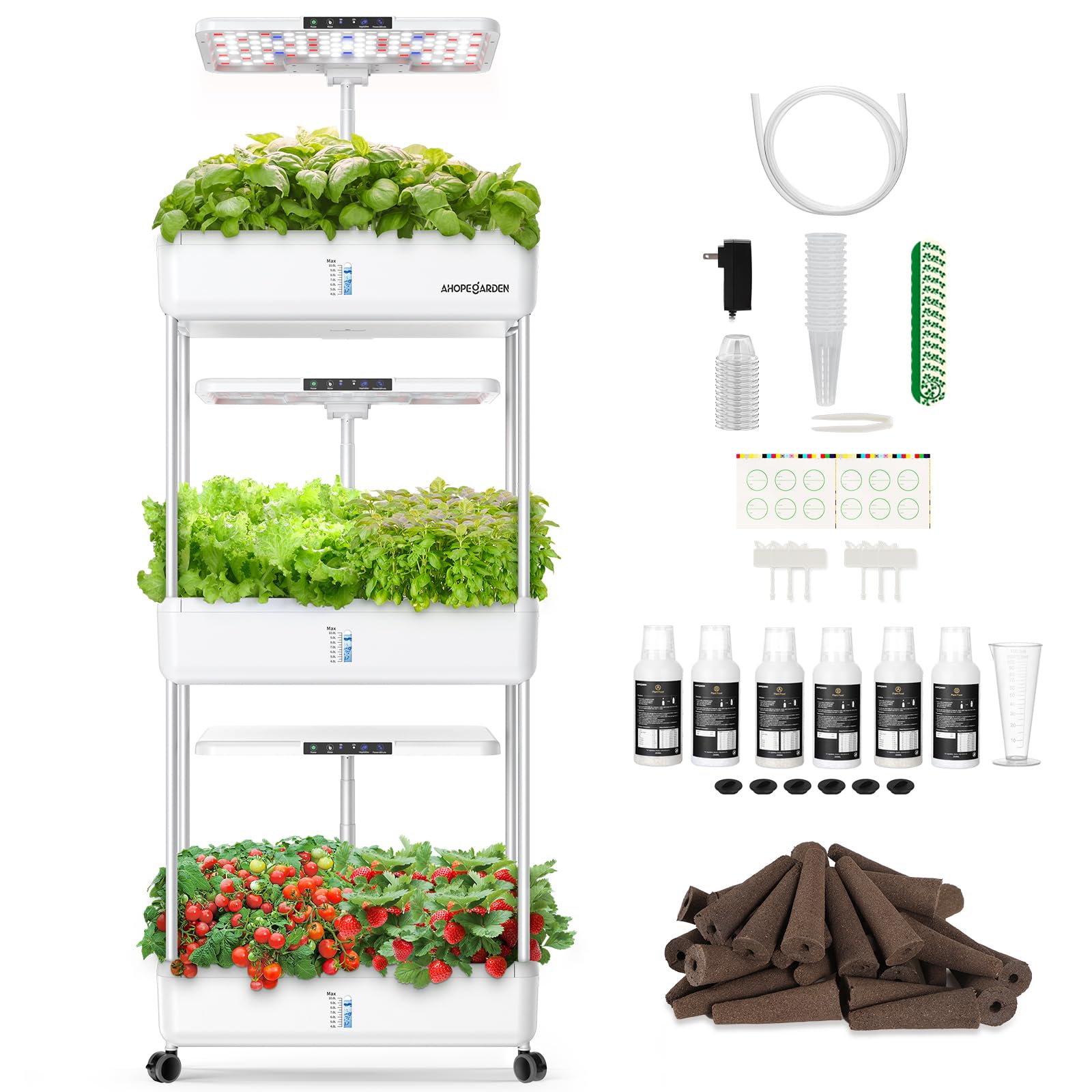
For a multi-shelf pantry build, the win is in the thinness. Bar lights radiate heat sideways and upward rather than dumping it straight down like a COB or quantum board, so the shelf below the canopy stays cooler. That keeps you from cooking the next tier of plants 14 inches under the previous shelf's drip tray.
Coverage math for shelf tiers
Strawberries fruit reliably at 300-450 µmol/m²/s with a 14-16 hour photoperiod. The FC-E3000, mounted 14 inches above the canopy, produces roughly 600 µmol/m²/s at center and 350 µmol/m²/s at the edges of a 3x3 ft area. Dim it to 60-70% and you flatten the gradient, which is what you want for uniform ripening across a flat shelf of NFT channels or fabric pots. If your pantry shelves are 4 ft wide, plan to either run two FC-E3000s end-to-end or accept some edge falloff—strawberries are forgiving, but berry size will track light intensity.
Planning the walk-in pantry conversion
A typical walk-in pantry is 4-6 ft wide, 4-8 ft deep, and 8 ft tall with wire or melamine shelving. The conversion turns this into a 3-4 tier vertical grow with each tier 22-28 inches of vertical clearance. That clearance budget breaks down as: 4-6 inches for the light fixture and hanging hardware, 14-16 inches of light-to-canopy distance, 6-8 inches of strawberry canopy, and 4-6 inches for media/channel depth. If your existing shelves are spaced for canned goods (10-12 inches apart), you'll need to rebuild the rails.
Shelf material and waterproofing
Replace wire shelves with food-grade HDPE cutting boards, marine plywood sealed with epoxy, or aluminum sheet pans for drip catchment. Wire shelves drip onto the tier below and waste light by letting it pass through. A solid shelf with a 1 inch lip around the perimeter doubles as a reservoir for hydro systems or a drip tray for media-grown plants.
Wall and reflectivity treatment
Pantry walls are usually painted drywall, which reflects 60-75% of incident PAR depending on the white. Upgrade with 2-3 mil Mylar or panda film (Velcro-mounted so you can pull it for cleaning) to push reflectivity past 90%. In a narrow pantry, side reflectivity is the difference between strong central rows and weak edge plants.
Ventilation: the make-or-break detail
The FC-E3000 puts roughly 1,025 BTU/hr of heat into the pantry. Multiply by however many fixtures you run. A 4 ft x 6 ft x 8 ft pantry is 192 cubic feet—you want one full air exchange every 1-3 minutes, which means a 4-inch inline fan rated for 190+ CFM with carbon filter is the realistic minimum for a two-tier build. For a three or four-tier build, step up to a 6-inch fan.
Pull air from the bottom of the pantry (cooler intake near the floor or through a louvered door vent) and exhaust through the ceiling into an attic, a vented soffit, or the original pantry exhaust if you're lucky enough to have one. Strawberries hate stagnant air—it invites botrytis (gray mold) on the fruit—so add a small clip fan to each tier for canopy-level circulation.
Humidity targets for fruiting strawberries
Vegetative phase: 65-70% RH. Flowering and fruiting: 55-65% RH. Above 70% during fruiting, botrytis sporulates on overripe or damaged berries within 24-48 hours. Below 50%, pollination drops and tip burn shows up on new leaves. A converted pantry typically runs dry in winter (35-45%) and humid in summer (60-75%), so plan a small humidifier for cold months and rely on exhaust for warm months. For a deeper dive on this side of the build, see our guide on maintaining humidity levels for indoor gardens.
Growing system: NFT, drip, or media?
Strawberries on a shelf can run three ways:
NFT channels (recommended for pantry shelves)
4-inch NFT channels with 3-inch net pot holes on 8 inch centers fit a 36-inch shelf perfectly with four plants per channel and two channels per shelf—eight plants per tier, 24-32 plants in a three or four-tier build. NFT keeps the shelf dry, reduces weight, and lets you flush nutrients fast if EC drifts. Downside: pump failure means dead plants within hours. To compare NFT to other approaches, our overview of NFT vs. DWC for hobby growers walks through the tradeoffs.
Top-feed drip with coco coir bags
1-gallon coco coir bags with two drip stakes each. Lower failure risk (a clogged emitter kills one plant, not a tier), more buffer if you skip a day, and excellent root oxygenation for strawberries. Heavier per shelf (a wet 1-gallon coco bag weighs 8-10 lb), so make sure your shelves are rated for the load.
Fabric pots with hand watering
The lazy option, fine for a single-tier hobby setup, but tedious across 24 plants. Skip this for any multi-tier build.
Nutrient and pH targets for strawberries under the FC-E3000
Strawberries are light-to-moderate feeders. Vegetative EC: 1.2-1.4 mS/cm. Flowering and fruiting: 1.6-2.0 mS/cm. Push higher and you'll get lush leaves but small berries. pH: 5.8-6.2 for hydro, 6.0-6.5 for coco. Calcium and potassium drive berry size and shelf life, so a strawberry-specific or tomato-style two-part formula works better than a generic veg blend. Check our roundup of hydroponic nutrient solutions for formulas that have proven out on berries.
Photoperiod by variety
Day-neutral varieties (Albion, Seascape, San Andreas) fruit continuously under 14-16 hour days—the right choice for a pantry build. Everbearing varieties (Quinault, Ozark Beauty) do two-three flushes per year. June-bearing varieties (Honeoye, Earliglow) need a cold dormancy period and aren't ideal for indoor year-round production.
Pollination indoors
Strawberry flowers are self-pollinating but need physical movement to transfer pollen. The clip fans you installed for botrytis prevention do most of the work; supplement by running a small soft paintbrush across the open flowers every 2-3 days. Skip this and you'll get knobby, half-formed berries that taste fine but look mangled.
Heat management at the driver
The FC-E3000's external Mean Well driver is the single warmest object in the build. Mount it outside the canopy—on top of the pantry, on the wall above the door, or in an adjacent closet—so its 30-40W of heat dissipation doesn't add to the canopy temperature. The included 8 ft driver cable gives you room to work with. If you wall-mount the driver in the pantry itself, leave 4 inches of air gap on all sides.
Dimming and photoperiod control
The FC-E3000 dims via a knob on the driver from roughly 25% to 100%. Pair it with a smart plug (Kasa, Wyze, or any Matter-compatible model) for the 14-16 hour photoperiod and you have a complete light controller for under $20 added cost. Ramping dim isn't possible without an aftermarket controller, so accept the hard on/off—strawberries handle it fine.
Pest pressure in a closed pantry
Spider mites and aphids ride in on starter plants. Quarantine new strawberry crowns for 7-10 days in a separate space before introducing them to the pantry, inspect undersides of leaves weekly, and keep a bottle of insecticidal soap or neem on hand. Closed pantry conversions are actually easier to keep clean than tents because there's no outdoor air ingress beyond the intake vent. For broader prevention strategy, see our guide on combating common indoor garden pests.
Realistic yields
A well-run 3-tier pantry with 24 day-neutral strawberry plants under three FC-E3000s, dialed to roughly 400 µmol/m²/s and 16-hour days, will produce 0.5-1 lb of berries per plant per year after the first 60-day establishment period. That's 12-24 lb annually from a single converted pantry—enough for a household to have fresh berries on cereal multiple times a week, plus the occasional surplus for freezing.
Budget breakdown
Rough numbers for a 3-tier, 24-plant pantry build:
- 3x Mars Hydro FC-E3000 fixtures: ~$700-850
- 4-inch inline fan + carbon filter + ducting: ~$140-180
- 6x NFT channels with end caps and fittings: ~$180-240
- Reservoir (15-20 gal), pump, tubing: ~$80-120
- Mylar film and mounting hardware: ~$40-60
- pH and EC meters: ~$60-150 (see our 2026 meter roundup)
- Nutrients, starter plugs, and consumables for year one: ~$120-180
Total: roughly $1,300-1,800 for the initial build, with annual operating cost around $200 for nutrients, replacement crowns, and electricity (the lights run about $25-35/month at average US rates).
Common mistakes
Hanging the FC-E3000 too low (under 10 inches) bleaches leaves and stalls flowering. Running shelves too tight vertically (under 20 inches of clearance) crushes canopy air movement. Skipping the carbon filter means a pantry that smells like strawberry leaves and damp coco coir throughout the house—pleasant for a week, less so by month three. Ignoring shelf load ratings is the worst: a wet 3-tier shelf with 8 coco bags per tier is over 200 lb of distributed load, and stock pantry shelving often tops out at 50-75 lb per shelf.
Frequently Asked Questions
How many strawberry plants can one Mars Hydro FC-E3000 cover?
One FC-E3000 reliably covers 8-12 strawberry plants on a 3x3 ft shelf at 14 inches hang height, delivering 350-500 µmol/m²/s across the canopy. Spread plants to 8-inch centers for airflow and berry sizing.
What hang height works best for the FC-E3000 over strawberries in a pantry?
Start at 16 inches above the canopy at 70% dim for seedlings and newly transplanted crowns, drop to 12-14 inches at 80-90% dim once flowering starts. Watch for leaf cupping or bleaching as your signal to raise the light or dim further.
Can I run two tiers of strawberries under FC-E3000s in a standard walk-in pantry?
Yes, two tiers fit comfortably in an 8 ft ceiling pantry with 28-30 inches per tier. Three tiers are possible with careful planning at 22-24 inches per tier, but you'll lose some hang-height flexibility and need to commit to a low-profile growing system like NFT.
Do strawberries need supplemental UV or far-red from the FC-E3000?
The FC-E3000's stock spectrum already includes enough red and far-red to drive flowering and ripening. UV supplementation is not needed for fruit production, though some growers report slightly more aromatic berries with a 5-10 minute UV-A dose daily. It's optional, not required.
How loud is the ventilation in a pantry conversion next to a kitchen?
A 4-inch AC Infinity or Vivosun inline fan at 50-70% speed reads 25-35 dB at 6 ft—quieter than a refrigerator. Mount the fan in a foam-lined box or hang it from bungee cords to kill vibration noise, and use insulated ducting to absorb airflow rush at the exhaust.
What's the electricity cost of running three FC-E3000s for strawberries year-round?
Three FC-E3000s at full power draw 900W. At 16 hours per day and the US average $0.16/kWh, that's $69/month or roughly $830/year. Dim to 70% for most of the cycle and that drops to about $580/year, before counting the small fan and pump loads.
Should I use coco coir or DWC for strawberries in a pantry shelf build?
Coco coir in 1-gallon bags is more forgiving and more pantry-friendly because it doesn't depend on continuous pump operation. DWC produces faster growth but the water weight is brutal on shelves and a pump failure wipes out a tier. For most home pantry conversions, top-feed drip into coco wins. Our deep-dive on coco coir versus soil covers the substrate side in more detail.
Key Takeaways
- Choosing the right mars hydro fc-e3000 strawberry pantry shelf means matching capacity and output ports to your actual devices
- Always check actual watt-hours (Wh), not just watts — runtime depends on Wh, not peak output
- Also covers: FC-E3000 for strawberries
- Also covers: walk in pantry grow light conversion
- Also covers: mars hydro strawberry indoor
- Compare price-per-Wh across models to find the best value for your budget